
Daily vs. Weekly Habit Tracking: Which Approach Works Best for You?

Habit tracking has become a popular tool for personal development and self-improvement enthusiasts. Whether it's aiming to exercise more, eat healthier, read regularly, or any other habit you want to cultivate, keeping track of your progress can be a powerful motivator. However, the frequency at which you track your habits can significantly impact your approach and ultimately your success. In this blog post, we'll delve into the differences between tracking habits on a daily basis versus a weekly basis, and when each approach might be most effective.
Psst.. If you are new to habit tracking make sure to check out a Step by Step Guide to Habit Tracking. Also, do not forget to grab your Free Weekly Habit Tracker.
This post may contain affiliate links. I would never recommend a product that I do not truly love. The price does not increase for you. Thanks for supporting Sunflower Child Designs. See my disclosure for more info.
Daily Habit Tracking: The Power of Consistency
Daily habit tracking involves recording your progress on a daily basis, usually at the end of each day. This approach offers several benefits:
1. Immediate Feedback:
Tracking your habits daily provides immediate feedback on your progress. You can quickly identify patterns, trends, and areas where you might be struggling. This instant feedback loop allows for timely adjustments and course corrections, keeping you on track towards your goals.
2. Increased Accountability:
Daily tracking instills a sense of accountability as you commit to reviewing and updating your habits every day. Knowing that you have to record your activities can motivate you to stay consistent and avoid slipping back into old habits.
3. Momentum Building:
Consistency breeds momentum. By tracking your habits daily, you build a streak of consecutive days, which can be highly motivating. The longer your streak, the more reluctant you may feel to break it, thus reinforcing your commitment to your habits.
4. Enhanced Awareness:
Daily habit tracking fosters heightened self-awareness. You become more attuned to your behaviors, triggers, and habits' impact on your daily life. This increased awareness can lead to better decision-making and habit formation over time.
When to Choose Daily Habit Tracking:
Daily habit tracking is ideal for habits that require consistent, daily action, such as:
Exercise: Tracking daily workouts helps maintain consistency and progress in your fitness journey.
Meditation: Daily mindfulness practice benefits from regular tracking to cultivate a habit of daily reflection and relaxation.
Nutrition: Monitoring daily food intake helps maintain a balanced diet and promotes mindful eating habits.
Weekly Habit Tracking: A Flexible Approach
Weekly habit tracking involves summarizing your habits' progress once a week, typically at the end of the week. This approach offers its own set of advantages:
1. Flexibility:
Weekly tracking allows for greater flexibility in your routine. Instead of focusing on daily perfection, you have the freedom to adjust and adapt your habits throughout the week. This flexibility can reduce the pressure and stress associated with maintaining a perfect daily streak.
2. Big-Picture View:
By tracking habits on a weekly basis, you gain a broader perspective of your progress. You can assess your overall consistency and identify trends or patterns that may not be apparent on a daily basis. This big-picture view enables you to make more informed decisions about your habits moving forward.
3. Less Overwhelm:
For some people, daily tracking can feel overwhelming, especially if they have numerous habits to monitor. Weekly tracking simplifies the process by condensing the information into a single weekly review. This can alleviate stress and make habit tracking feel more manageable.
4. Adjusting for Variability:
Life is inherently unpredictable, and daily routines can be disrupted by unexpected events or obligations. Weekly habit tracking allows you to account for variability and make adjustments accordingly. If you miss a day or two, you can compensate by focusing on consistency over the course of the week.
When to Choose Weekly Habit Tracking:
Weekly habit tracking may be more suitable for habits that don't require daily repetition or for individuals who prefer a more flexible approach, such as:
Reading: Tracking weekly reading goals allows for flexibility in scheduling reading sessions around your availability.
Writing: Weekly writing targets accommodate fluctuations in creativity and inspiration while still maintaining a consistent writing habit.
Learning: Tracking weekly learning objectives provides flexibility in exploring new topics or skills at your own pace.
Which Approach Is Right for You?
Choosing between daily and weekly habit tracking depends on various factors, including your personality, lifestyle, and the nature of the habits you're trying to cultivate. Here are some considerations to help you determine which approach aligns best with your goals:
1. Frequency of Action:
Consider how frequently your habits require action. Habits that necessitate daily repetition, such as exercise or meditation, are better suited for daily tracking. Conversely, habits that can be practiced less frequently, like reading or learning, may be tracked on a weekly basis.
2. Level of Detail:
Evaluate the level of detail you prefer in tracking your habits. If you thrive on daily structure and accountability, daily tracking provides a more granular view of your progress. However, if you prefer a more flexible and less rigid approach, weekly tracking may be more suitable.
3. Lifestyle Factors:
Take into account your lifestyle and schedule. If your days are highly structured and consistent, daily tracking may fit seamlessly into your routine. On the other hand, if your schedule varies from day to day, weekly tracking offers greater adaptability and convenience.
4. Motivational Factors:
Reflect on what motivates you to stick to your habits. For some individuals, the satisfaction of maintaining a daily streak serves as a powerful motivator. For others, the freedom to adjust and recalibrate their habits on a weekly basis provides greater motivation and sustainability.
Adapting to Daily and Weekly Tracking Across Different Formats
Regardless of the format of your habit tracker—whether it displays the week, month, or even the entire year on a single page—you can adapt it to log your habits either on a daily or weekly basis. The key lies in how you utilize the available space and structure your tracking method to align with your preferred tracking frequency. Here's how you can make the most of different habit tracker formats:
Weekly Habit Tracker: If your habit tracker shows one week on an entire page, you can use it to log both daily and weekly habits effectively. For daily habits, simply allocate space within each day of the week to record your activities. You might use checkboxes, symbols, or color-coding to indicate whether you've completed each habit. For weekly habits, you can designate a separate section or column where you summarize your progress for each habit over the course of the week. This allows you to capture both daily and weekly habits within the same layout.
Monthly Habit Tracker: A habit tracker that displays a full month on one page offers more space for tracking multiple habits over an extended period. To log daily habits, divide each day into sections corresponding to the habits you're tracking. You can use columns or rows to represent each habit and mark off each day as you complete it. For weekly habits, you can allocate specific sections or columns to summarize your progress for each habit throughout the month. This format provides a comprehensive view of your habits' consistency and allows for easy reference and analysis.
Yearly Habit Tracker: While less common, a habit tracker that shows an entire year on a single page offers a broad overview of your habits over a longer timeframe. To log daily habits, you can dedicate each row or column to a specific habit and mark off each day as you complete it. For weekly habits, you might allocate sections within each month to summarize your progress for each habit on a weekly basis. Alternatively, you can designate separate sections for weekly summaries at the end of each month. This format provides a macroscopic view of your habits' progression throughout the year, highlighting trends and patterns over time.
Blending Consistency with Convenience: Utilizing Memory and Weekly Reviews for Habit Tracking
While the concept of daily habit tracking implies recording your activities each day, the reality is that many people lead busy lives and may not have the time or inclination to sit down and update their habit tracker on a daily basis. However, this doesn't mean that daily habits and weekly tracking are mutually exclusive. In fact, it's entirely possible to maintain daily habits while only sitting down to log them in your habit tracker once a week, relying on memory to recall your activities.
This approach combines the benefits of daily consistency with the convenience of weekly tracking. Here's how it works:
Maintaining Daily Habits: You continue to engage in your daily habits as usual, whether it's exercising, meditating, reading, or any other activity you're tracking. The key is to stay committed to your habits and perform them consistently throughout the week.
Tracking Habits Once a Week: Instead of recording your habits every day, you set aside a specific time once a week to sit down and update your habit tracker. This could be on a Sunday evening or any other day that works best for you. During this weekly review, you reflect on your activities over the past week and input them into your tracker.
Relying on Memory: Since you're updating your habit tracker retrospectively, you rely on your memory to recall your daily activities. This may involve mentally retracing your steps and reflecting on what you did each day. While memory isn't perfect and may be prone to inaccuracies, it can still provide a general overview of your habits and progress.
Adjusting for Variability: It's important to acknowledge that relying on memory for habit tracking introduces some level of variability and potential for error. You may forget certain activities or misremember details from earlier in the week. However, part of the beauty of this approach is its flexibility. If you miss logging a habit or can't recall specific details, you can make adjustments based on your best recollection and move forward.
Finding a Balance: Balancing daily habits with weekly tracking allows you to maintain consistency without feeling overwhelmed by the need to record your activities every day. It acknowledges the reality that life can be hectic, and it's okay to prioritize other responsibilities while still working towards your goals.
Customize Your Habit Tracking Experience: Exploring Versatile Layouts for Personalized Insights
Unlock the full spectrum of habit-tracking possibilities with our Comprehensive Habit Tracker Bundle, featuring weekly, monthly, and yearly habit tracker pages. Whether you prefer the granularity of weekly layouts or the broader perspective of monthly or yearly trackers, this bundle equips you with the tools to tailor your tracking method to your unique preferences. Explore the various layouts and formats to discern which pages resonate most with your tracking style and needs. With this versatile bundle at your fingertips, you'll gain invaluable insights into your habits and pave the way for personal growth and development.
To Wrap Up,
Both daily and weekly habit tracking have their merits, and the most effective approach ultimately depends on your preferences and the nature of the habits you're cultivating. Experiment with both methods to find what works best for you. Whether you thrive on daily consistency or prefer the flexibility of a weekly overview, the key is to find a tracking method that supports your goals and helps you lead a more fulfilling and productive life. Start tracking your habits today and figure out what works for you with this comprehensive habit tracker bundle.
Frequently Asked Questions:
-
-
it's perfectly okay. Missing a day doesn't ruin all your progress. The key is not to miss twice. I like to add a tiny dot on the habit tracker so I know that I did log for the day and didn’t just forget to.
-
Habit tracking is the process of monitoring and recording your behaviors, routines, or activities over time to gain insight into your habits and make positive changes. It typically involves keeping a log or journal of your habits, whether they're related to health, productivity, personal development, or any other aspect of your life.
-
Habit tracking provides valuable data and insights into your behaviors, helping you identify patterns, trends, and areas for improvement. It increases self-awareness, accountability, and motivation, making it easier to set and achieve your goals.
-
Check out the Step by Step Guide to Habit Tracking. To start habit tracking, identify the habits you want to track and choose a method that works for you, such as using a journal, mobile app, or habit tracking tool. Set specific goals, establish a tracking routine, and consistently record your progress.
-
Some effective habit tracking techniques include using visual aids like habit trackers or calendars, setting reminders or alarms, creating accountability partnerships or groups, and using rewards or incentives to stay motivated.
-
The habits you track should align with your goals and priorities. They can include health-related habits like exercise, nutrition, and sleep, productivity habits like time management and task completion, personal development habits like reading or meditation, or any other behaviors you want to cultivate or change.
-
The frequency of habit tracking depends on your preferences and the habits you're tracking. Some people prefer to track daily, while others track weekly or monthly. Choose a frequency that allows you to gather meaningful data without feeling overwhelmed.
-
Use the data from habit tracking to analyze your progress, identify patterns and trends, and make adjustments to your habits or goals as needed. Celebrate your successes, learn from setbacks, and continuously iterate to improve.
-
The time it takes to form a habit varies depending on the individual, the complexity of the habit, and other factors. While popular belief suggests it takes 21 days to form a habit, research indicates that it can take anywhere from 18 to 254 days, with an average of around 66 days.
-
Common challenges with habit tracking include maintaining consistency, dealing with setbacks or lapses, overcoming resistance to change, and accurately assessing progress. It's important to stay flexible, patient, and resilient throughout the habit tracking process.
-
To stay motivated while habit tracking, set realistic goals, track your progress visually, celebrate small victories, seek support from friends or family, and remind yourself of the benefits of forming new habits. Additionally, regularly reassess your goals and adjust your habits as needed to maintain motivation and momentum.
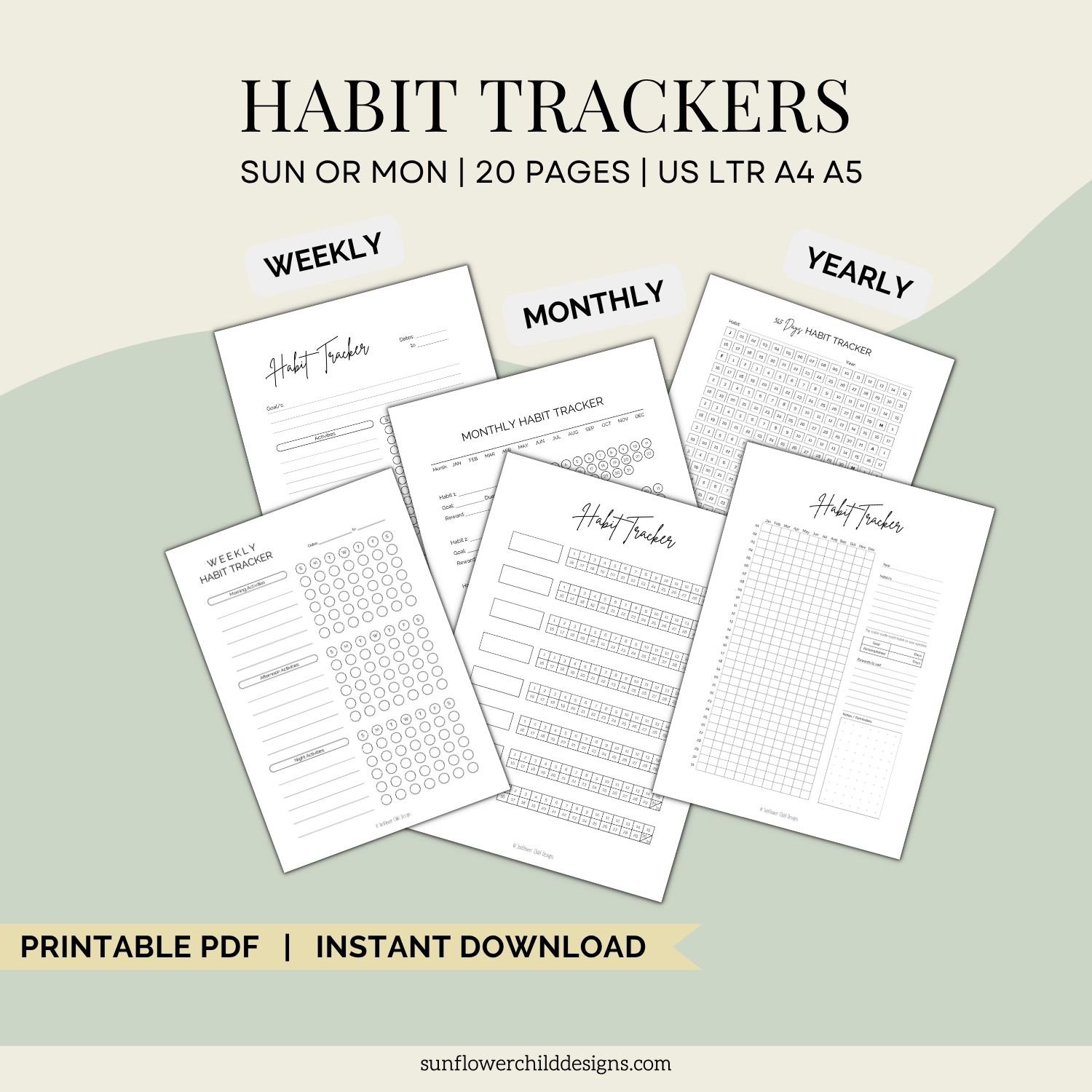
Simplify and improve your life with our Habit Tracker Printable Bundle. Designed for consistency and regularity, this bundle includes yearly, monthly, and weekly habit trackers. Stay organized and motivated as you monitor your daily habits, reach smaller goals, and ultimately achieve your year-long objectives. This printable bundle is your all-encompassing tool to habit tracking and lifestyle improvements.





- A - Guides
- April bullet journal ideas
- Bullet Journal
- December Bullet Journal Ideas
- Productivity systems
- Todoist tips
- august bullet journal ideas
- best pens for journaling
- brush pen calligraphy
- budgeting
- bullet journal setup FULL YEAR
- elf kit
- february bullet journal ideas
- fitness
- fluff prompts
- free printables
- gifts guide
- habit tracking
- hard cover planners
- how to bullet journal for beginners
- january bullet journal ideas
- july bullet journal ideas
- june bullet journal ideas
- manifestation journaling
- march bullet journal ideas
- may bullet journal ideas
- modern calligraphy alphabet
- november bullet journal ideas
- october bullet journal ideas
- planner binder
- pregnancy
- printable holiday planner
- printable planner pages
- printable stickers
- september bullet journal ideas
- setup from scratch
- setup using printables
- setup using stickers
- stranger things
- tarot
- witchy
Leave me a “tip”, go ahead and pin one!