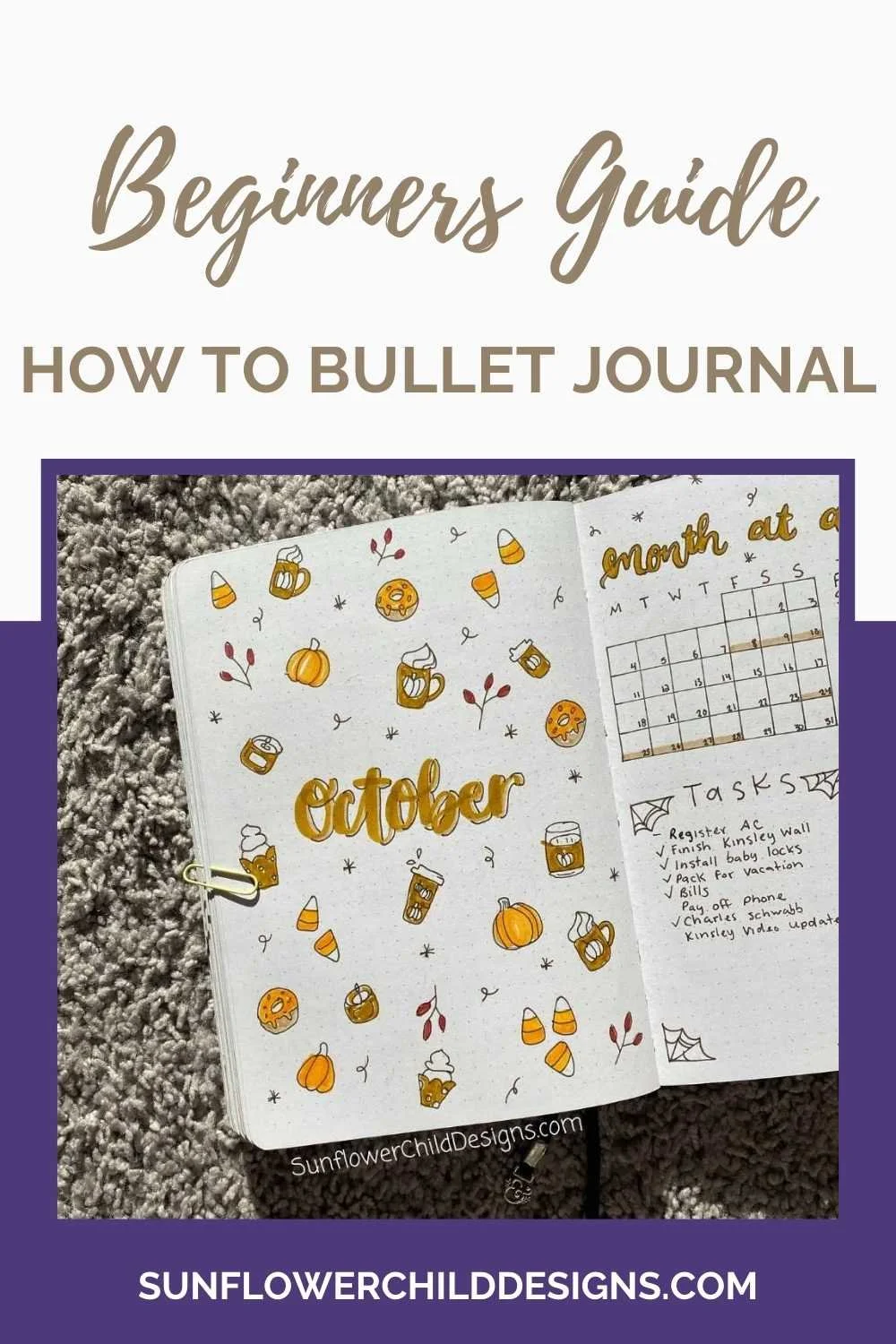
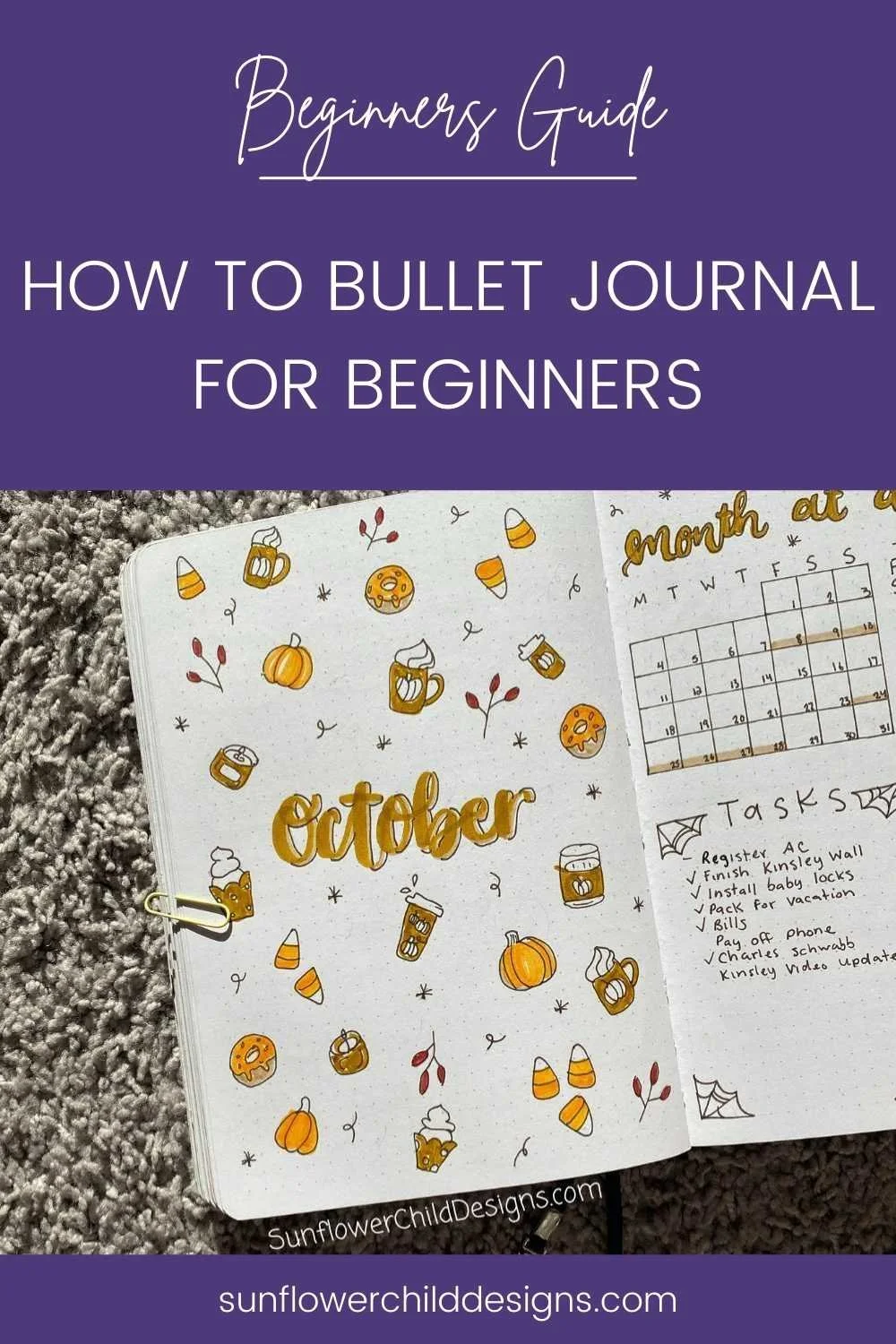
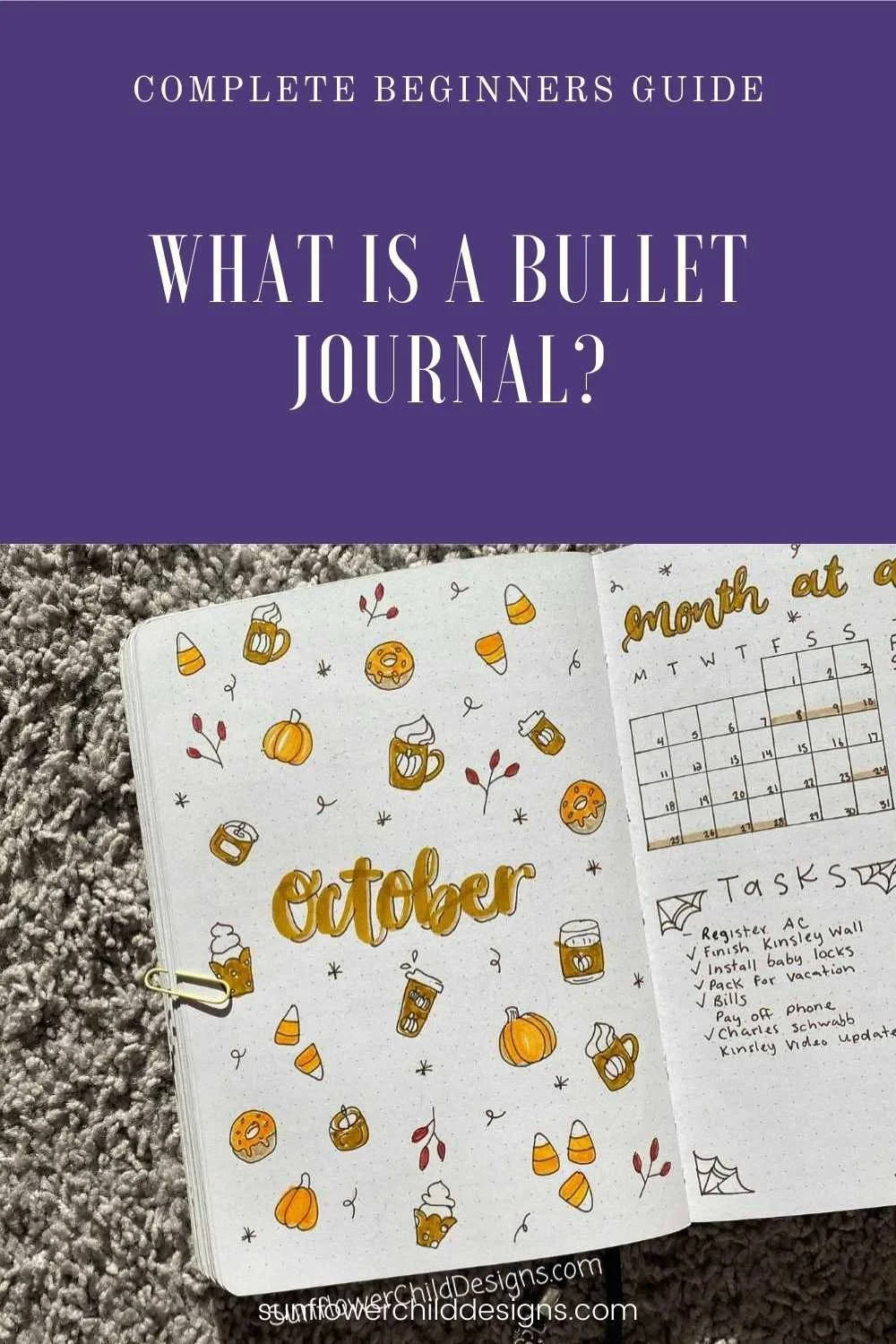
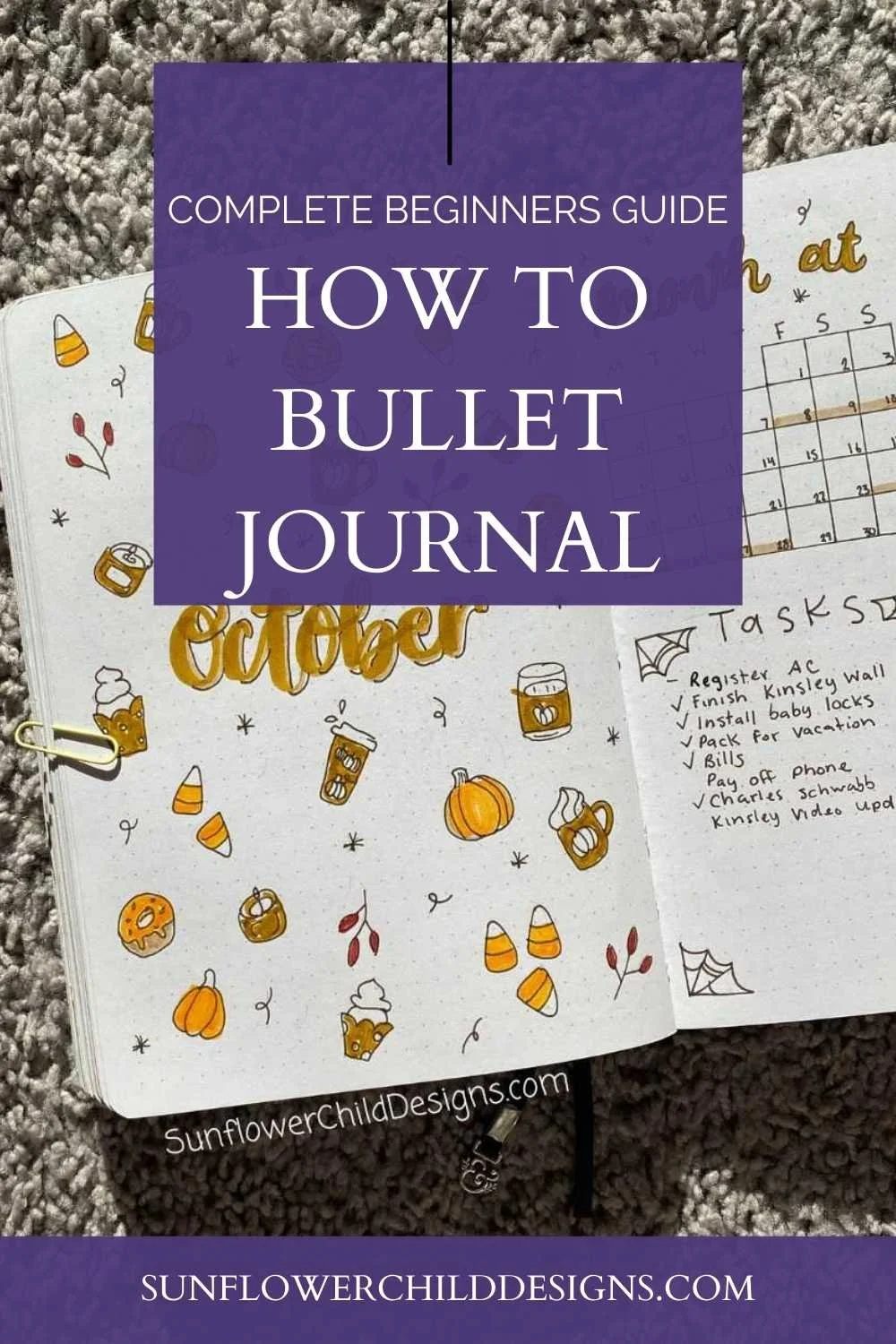
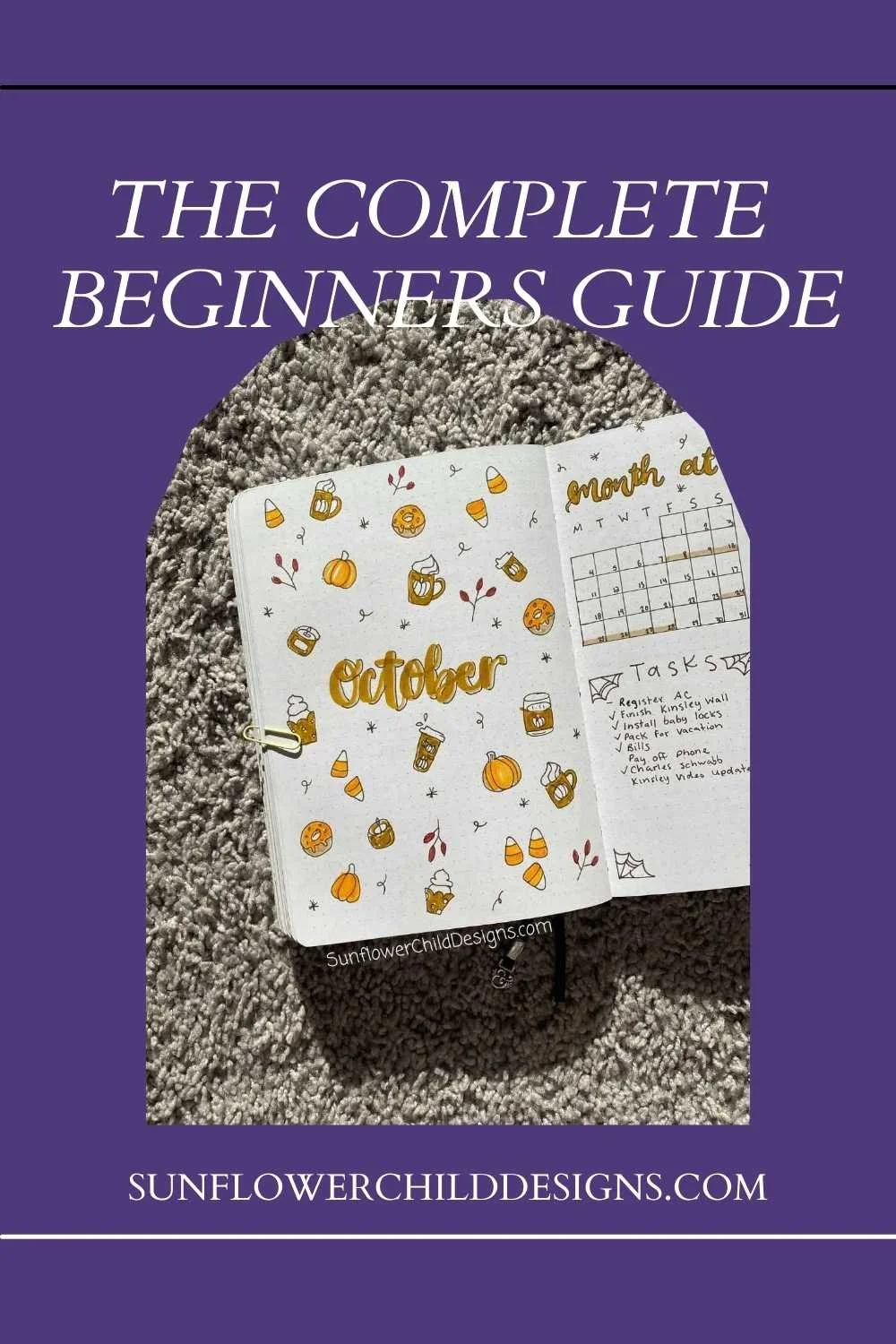
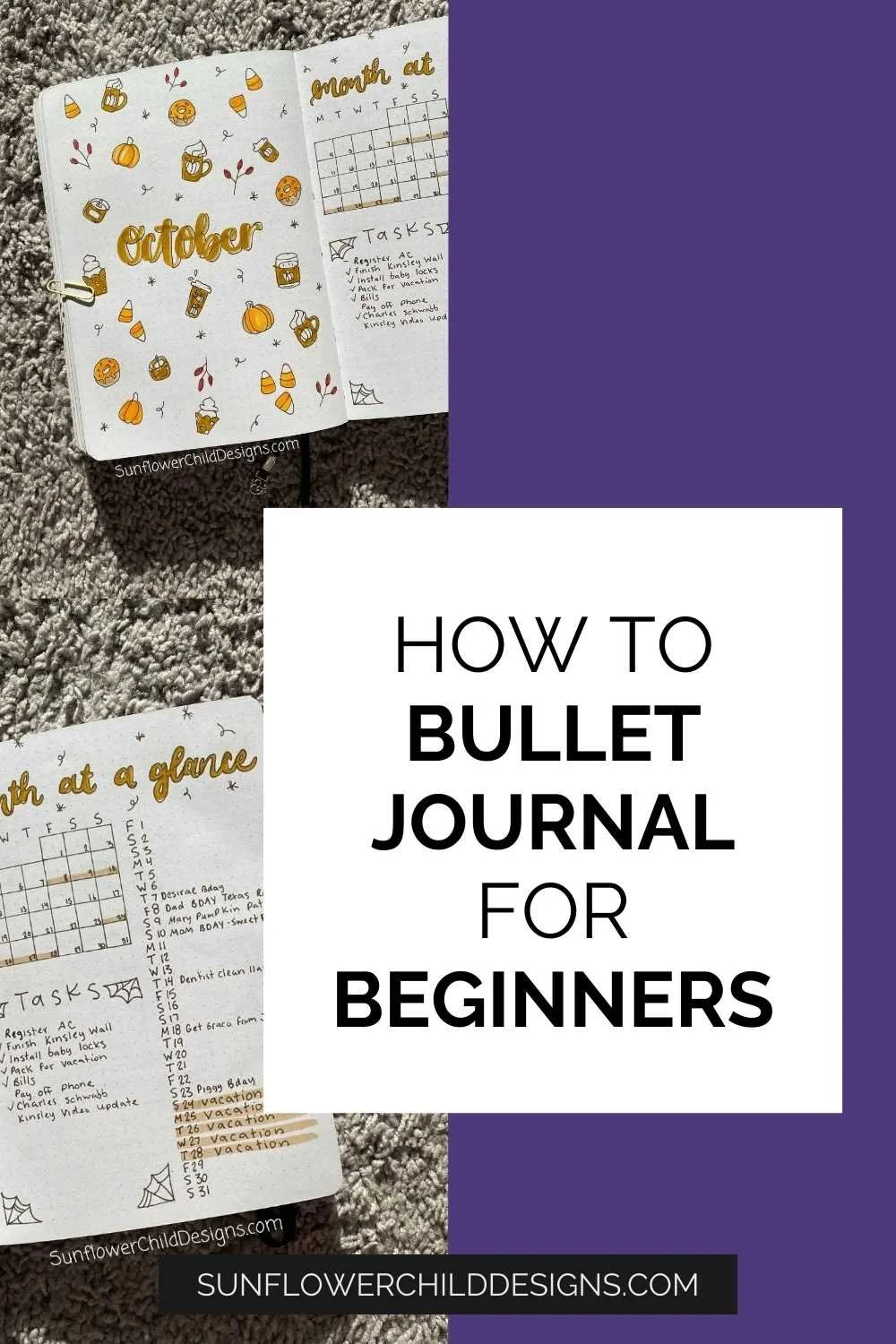
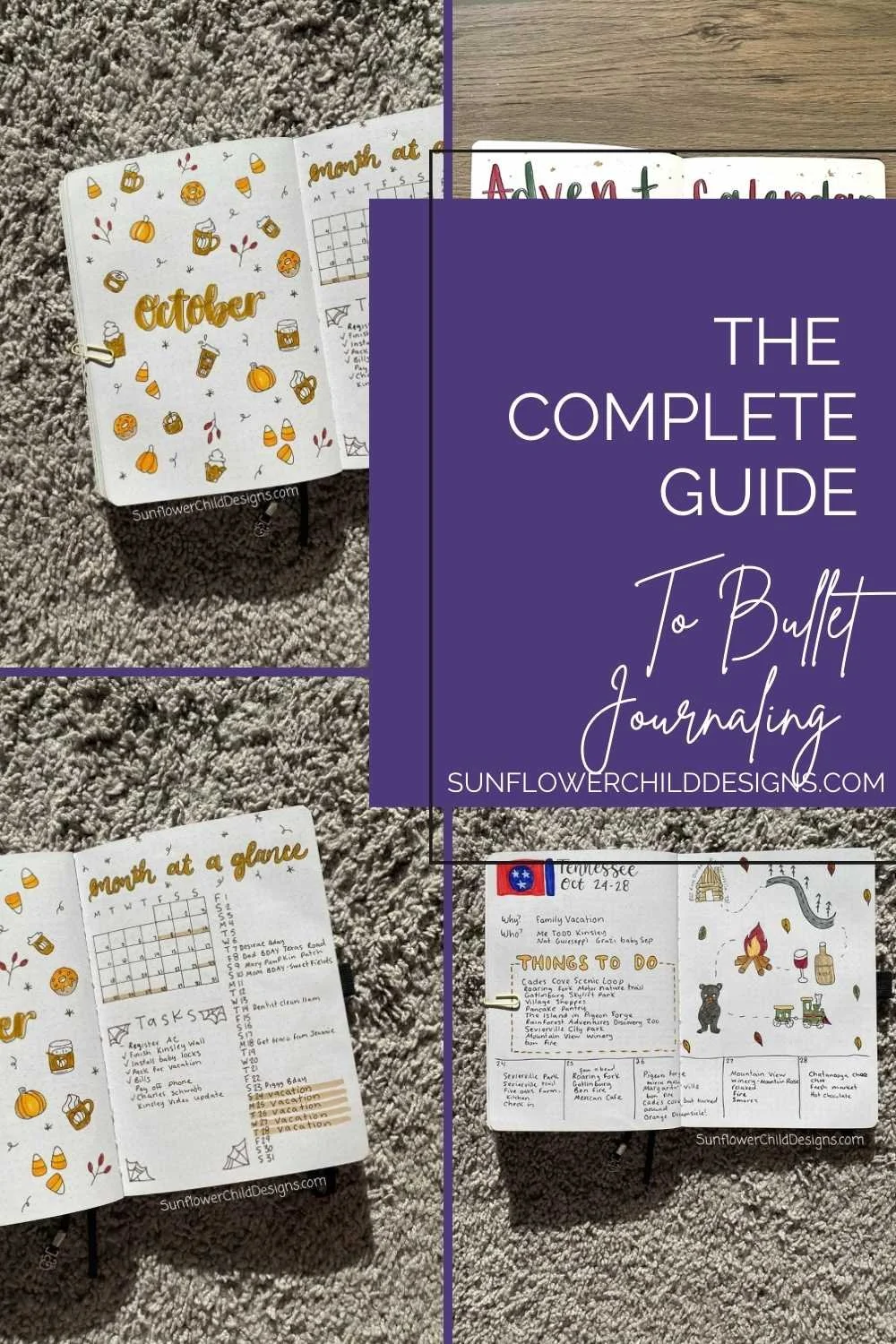
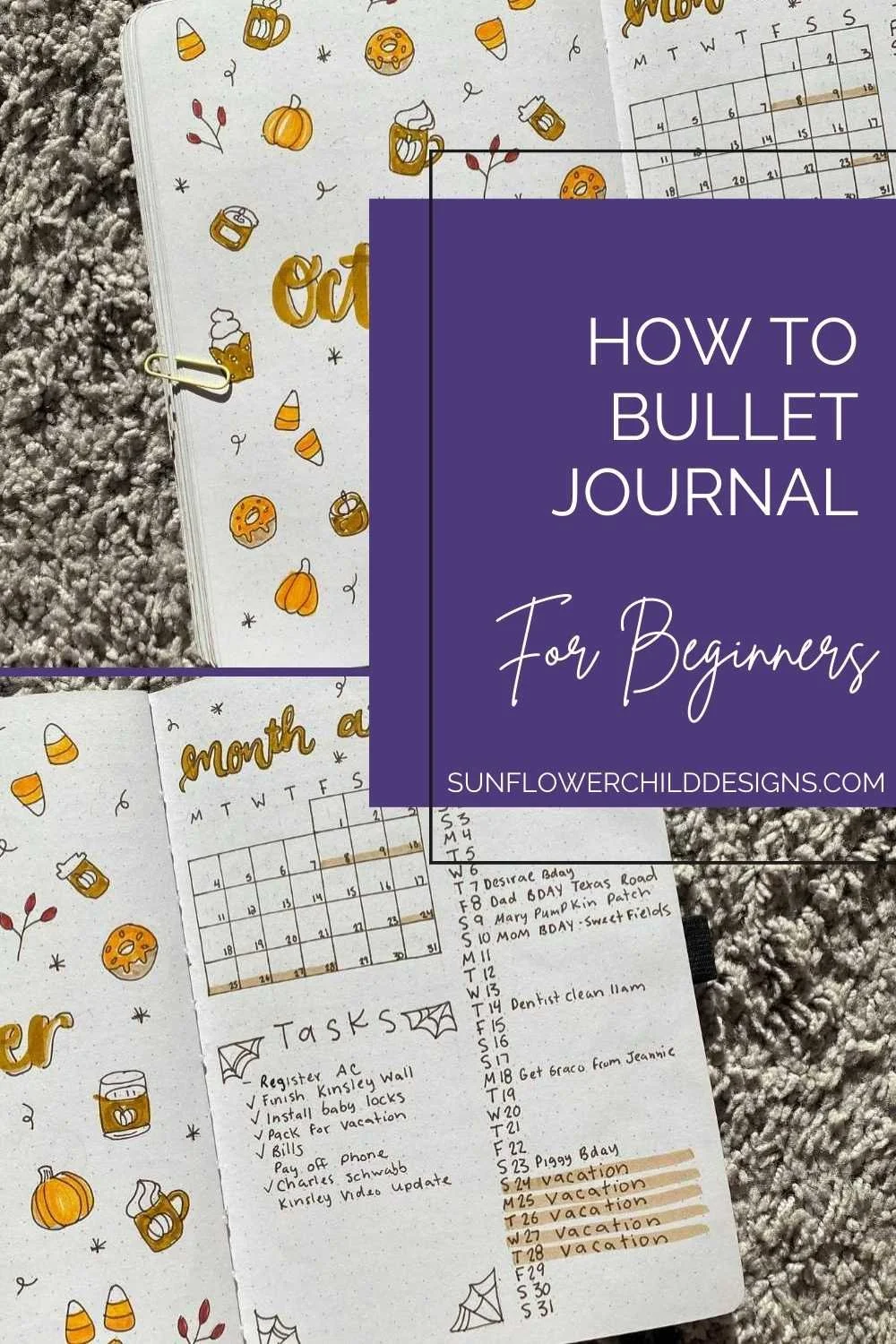
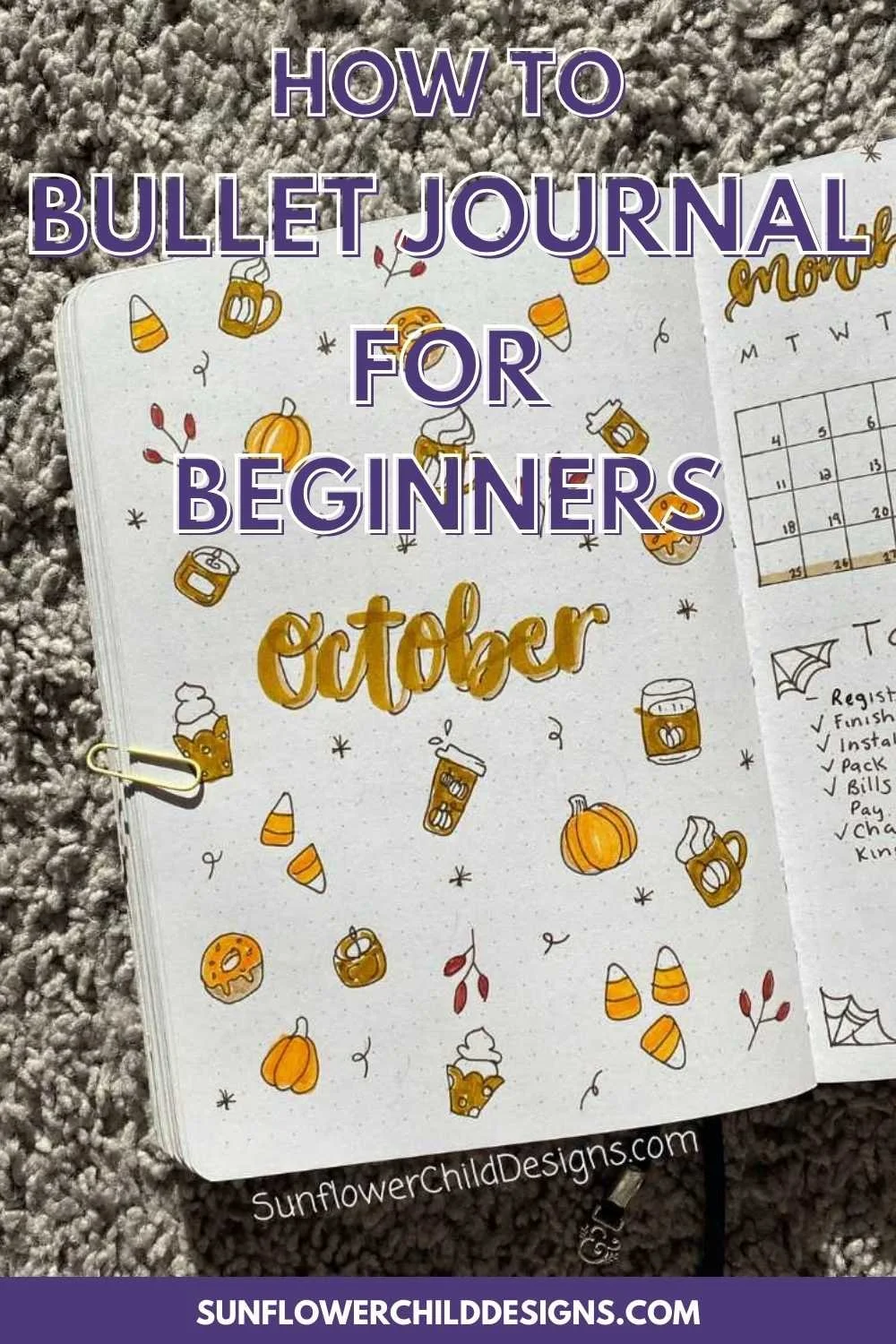
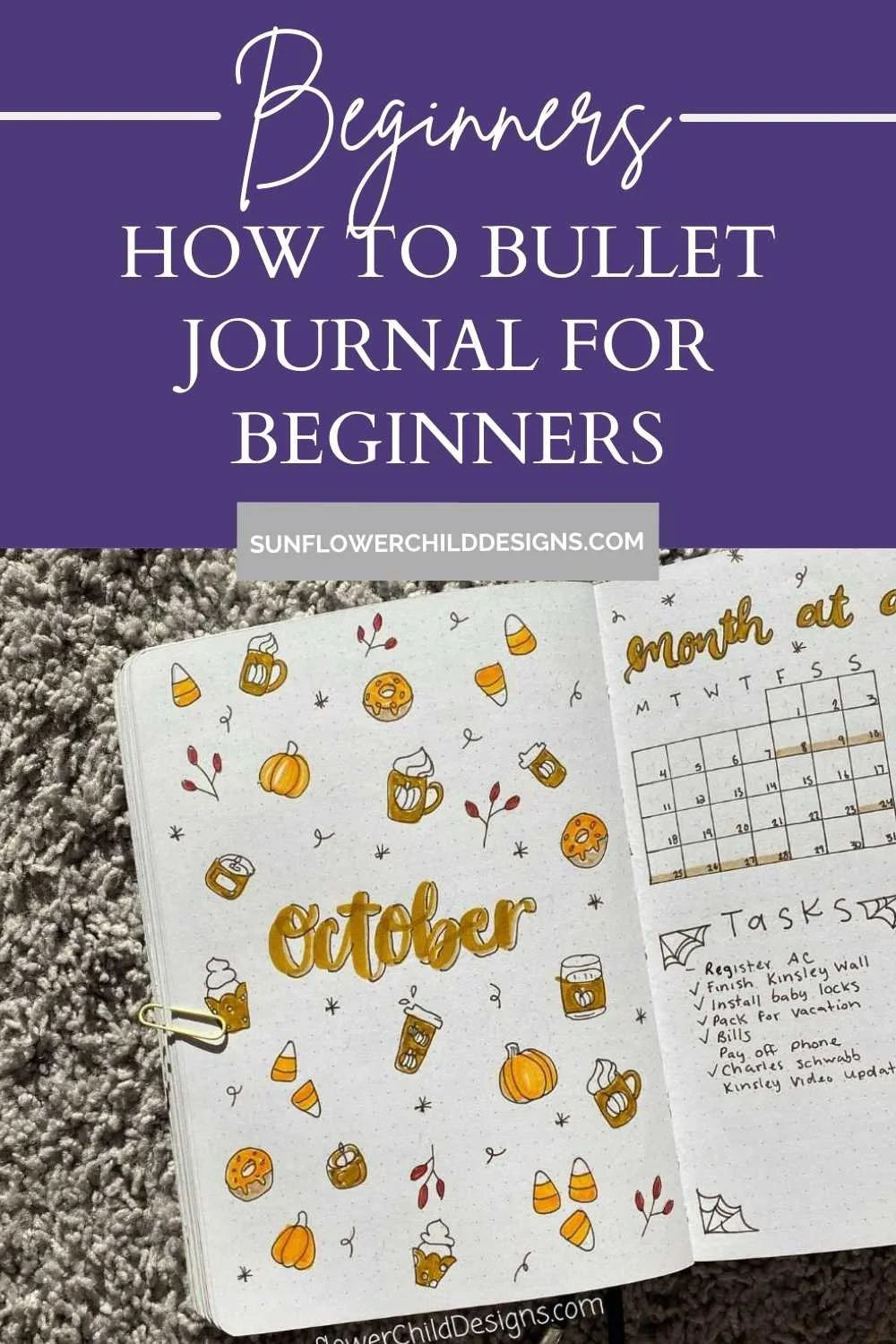
How to Bullet Journal for Beginners (Step-by-Step Guide)
If you’ve been curious about bullet journaling but feel overwhelmed, unsure, or “not artistic enough,” you’re in the right place.
This complete beginner’s guide will walk you through how to start a bullet journal step-by-step. By the end of this post, you’ll understand the bullet journal basics, know exactly what pages to create, and feel confident starting your first spread — even if you’ve never journaled before.
No perfection required.
No fancy supplies required.
Just you, a notebook, and a pen.
Let’s get started.
The Bullet Journal Method was created by Ryder Carol. Most bullet journals are above and beyond what is mentioned in the book. That is the beauty of bullet journaling, you literally turn it into what works for you.
This post may contain affiliate links. I would never recommend a product that I do not truly love. The price does not increase for you. Thanks for your support. See my disclosure for more info.
Table of Contents
What Is a Bullet Journal?
A bullet journal (often shortened to bujo) is a completely customizable planning system created to help you organize your life in one notebook.
It combines:
• Planner
• Task Manager
• Goal Tracker
• Habit Tracker
• Brain Dump
• Journal
Instead of using a pre-printed planner with fixed layouts, you design each page yourself. That means your journal can evolve with your life.
One month you might need:
• Wedding planning pages
• Fitness tracking
• Budget spreads
Another month you might need:
• School planning
• Content calendars
• Self-care trackers
Your bullet journal becomes a flexible system that supports your current season of life.
Why Start a Bullet Journal?
Before diving into setup, let’s talk about why bullet journaling has become so popular.
1. It Reduces Overwhelm
When everything is floating around in your head, it creates mental clutter. Writing things down gives your brain relief.
2. It Increases Productivity
A structured system helps you prioritize what actually matters instead of reacting to everything.
3. It Encourages Mindfulness
Bullet journaling isn’t just about tasks — it can include gratitude, reflection, and habit tracking.
4. It’s Completely Personal
You design it. No two bullet journals look the same.
And here’s the best part: there is no “wrong way” to do it.
Bullet Journal Terms for Beginners
Before we jump into setup, let’s quickly cover common terms you’ll see:
Bujo – Short for bullet journal
Spread – One or two pages that work together
Collections – are custom pages dedicated to a specific topic, e.g., reading log.
Monthly Spread – Your overview page for the month
Weekly Spread – A breakdown of your week
Daily Log – A page for daily tasks and notes
Once you understand these basics, everything feels much simpler.
What Supplies Do You Need to Start?
The truth? You only need:
• A notebook
• A pen
That’s it.
However, if you enjoy creativity, you might also like:
Micron Fine Liners - These are what I use everyday. They are pigmented so they are very black and great quality and do not bleed or smudge. There are really small nibs in this pack which you will need for small details and if you need to write small. This 10 pack has all the sizes!
Crayola Super Tips - Even the most experienced bullet journalers (if that is a word) use these! I pick these up daily. You can even use them to make faux calligraphy. These markers are inexpensive. I recommend the 100 pack as there are more colors than the 20 pack.
Tombow Brush Pens - These are more expensive but think about quality over quantity. There are so many color options. I love to use the light greys and light tans. If you are new to brush lettering I still think you should practice with these as the nibs are great quality and your writing will look better. The nibs are pretty large. Since I use an A5 I do not use this to draw headers but I love to color over headers with these. You can start small and buy single pens from your local craft store. Mine is Michaels.
Tombow Fued - This is a small brush pen. My favorite brush pen and most bullet journal enthusiasts will agree. It is great to write headers for smaller paper such as A5.
A clear ruler - I love being able to see through this ruler. I used to constantly keep moving the ruler over to make sure I was in the right spot, this ruler solves my problems.
Printables - To get you started.
Hard bound Journal If you want a hardbound journal these are my favorite. You can still use printables in these if you’d like. My printables come with a cut to A5 size so you can paste it into your journal! Stickers are great for hardbound journals. Use code SUNFLOWERCHILD10 for 10% off, I do not receive any commission.
But remember — simple always works.
Types of Bullet Journals
There are many types of bullet journals to choose from. The most popular are:
Hardbound bullet journals, with a dot grid 5mm grids are usually preferred with white paper. There are even dot grids that have brown craft paper, black paper and even rainbow colored paper! My favorite and most popular dot grid hardbound journals are from Archer and Olive. Use my discount code SUNFLOWERCHILD10 for 10% off! I do not make commission from this code.
Binder bullet journals, you can easily use planner printables and rearrange pages or reprint. A great option if you don’t want to mess up the hardbound. I sell many printable planners, printable planner stickers, and bullet journal printables in my SHOP.
Digital bullet journals, I personally have tried some but nothing beats the power of a pen. I will not be going over digital bullet journals.
Sizes of Bullet Journals
In these days there is pretty much any size you can think of. The most common are
A5, MOST POPULAR
US Ltr
A4
B5, POPULAR
B6
Travelers
8x8
My first journal was US letter, then I went to B5 and now I am using A5. A5 seemed so small to start out with I was not used to it but over time I realized that A5 is the perfect size. You do have to write a little smaller but the overall look is so much prettier and it is easier to travel with. For reference an A5 is almost the size of a piece of US letter paper folded in half. It is 5.75 x 8.25. If you want to use a binder journal your best bet is A5, US Letter or A4 as it is the easiest to find printables in that size although you can always make other page sizes work in your printer’s settings by clicking “fit to page”.
How to Start a Bullet Journal (Step-by-Step)
Now let’s walk through the actual beginner setup.
Step 1: Create an Index
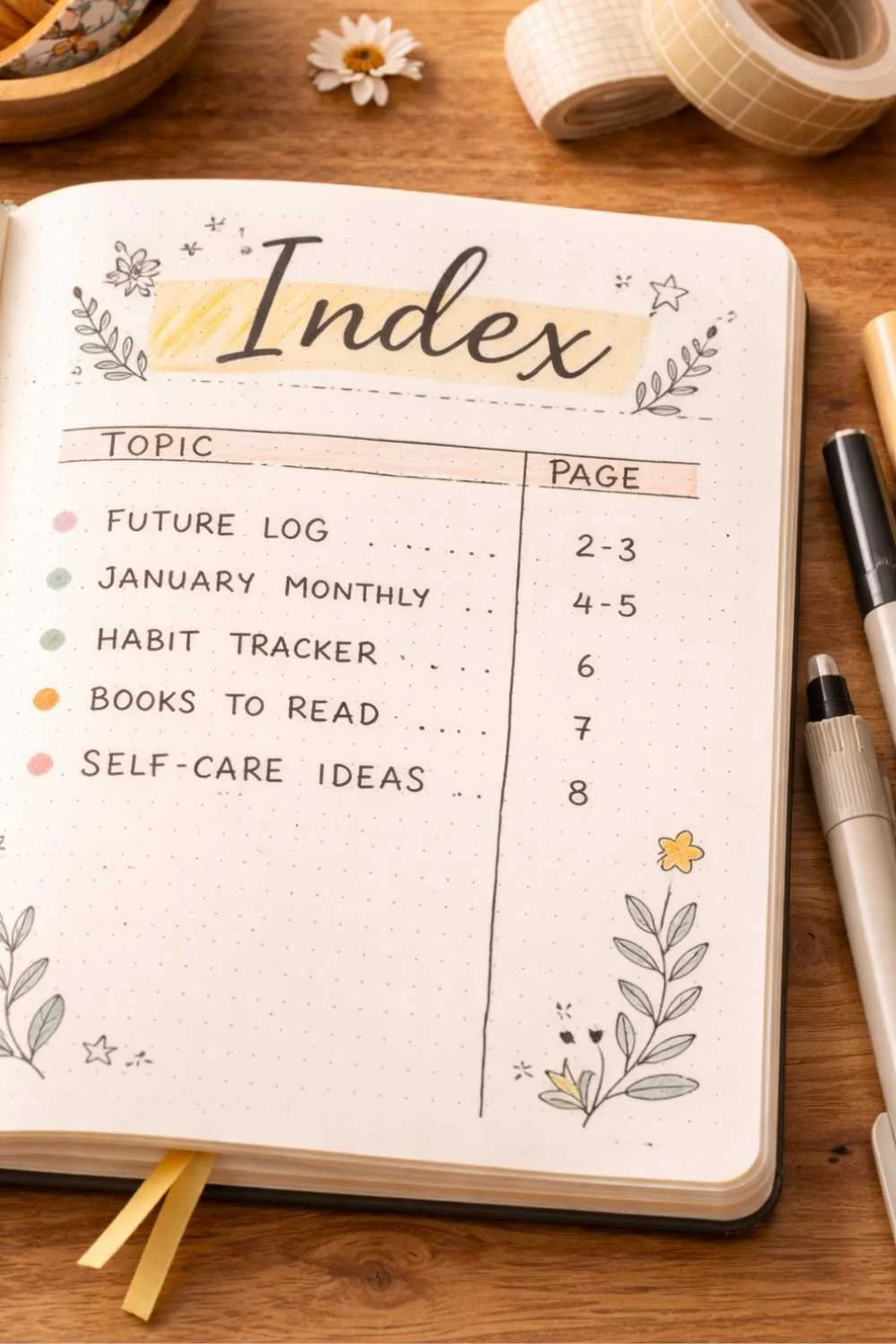
At the front of your notebook, leave a couple blank pages and title them “Index.”
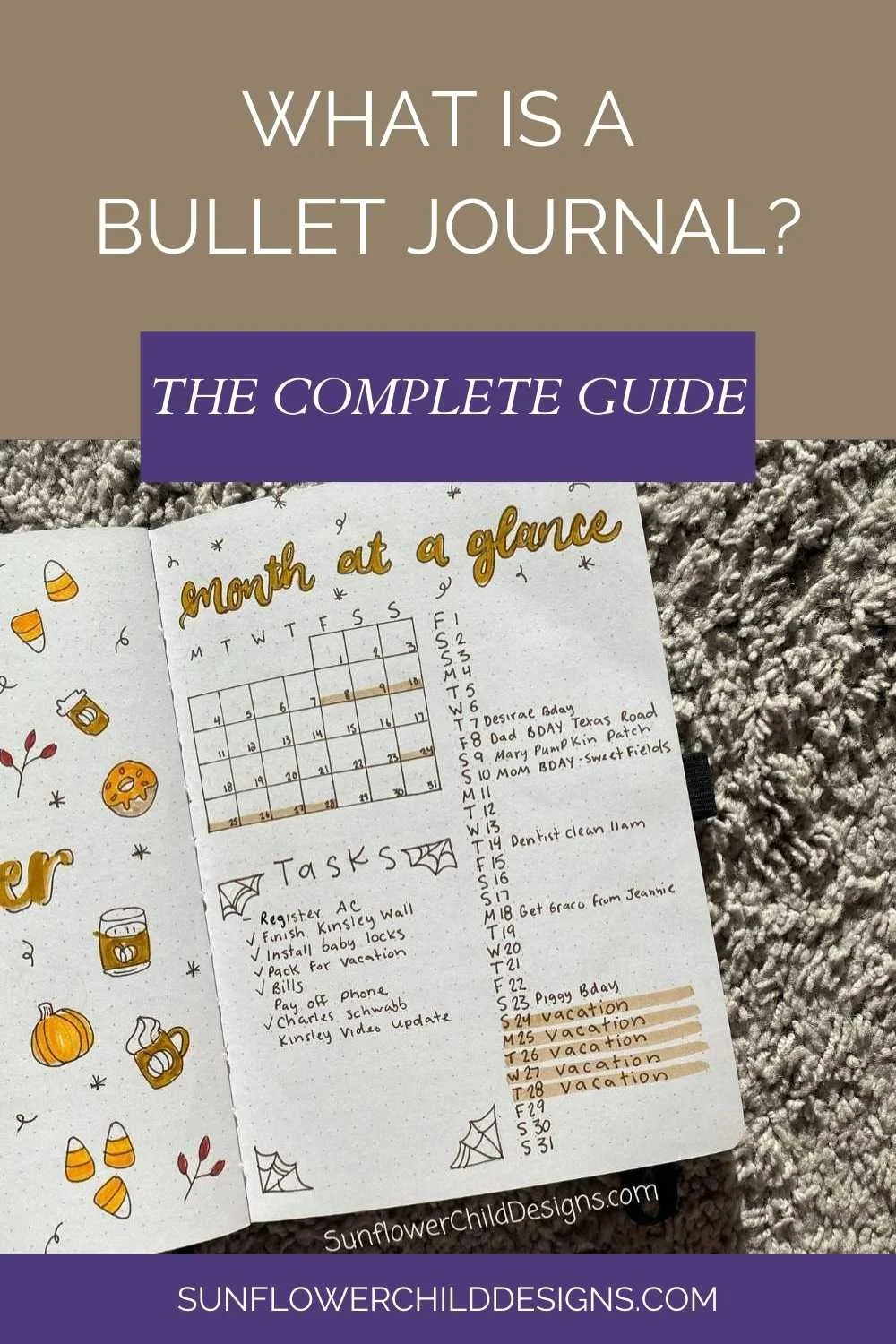
As you create new spreads, write the page number and title here. This helps you easily find pages later. Example is below.
If you don’t want an index, that’s okay too. It’s optional, GUILTY! I like to opt for repositionable Avery tabs.
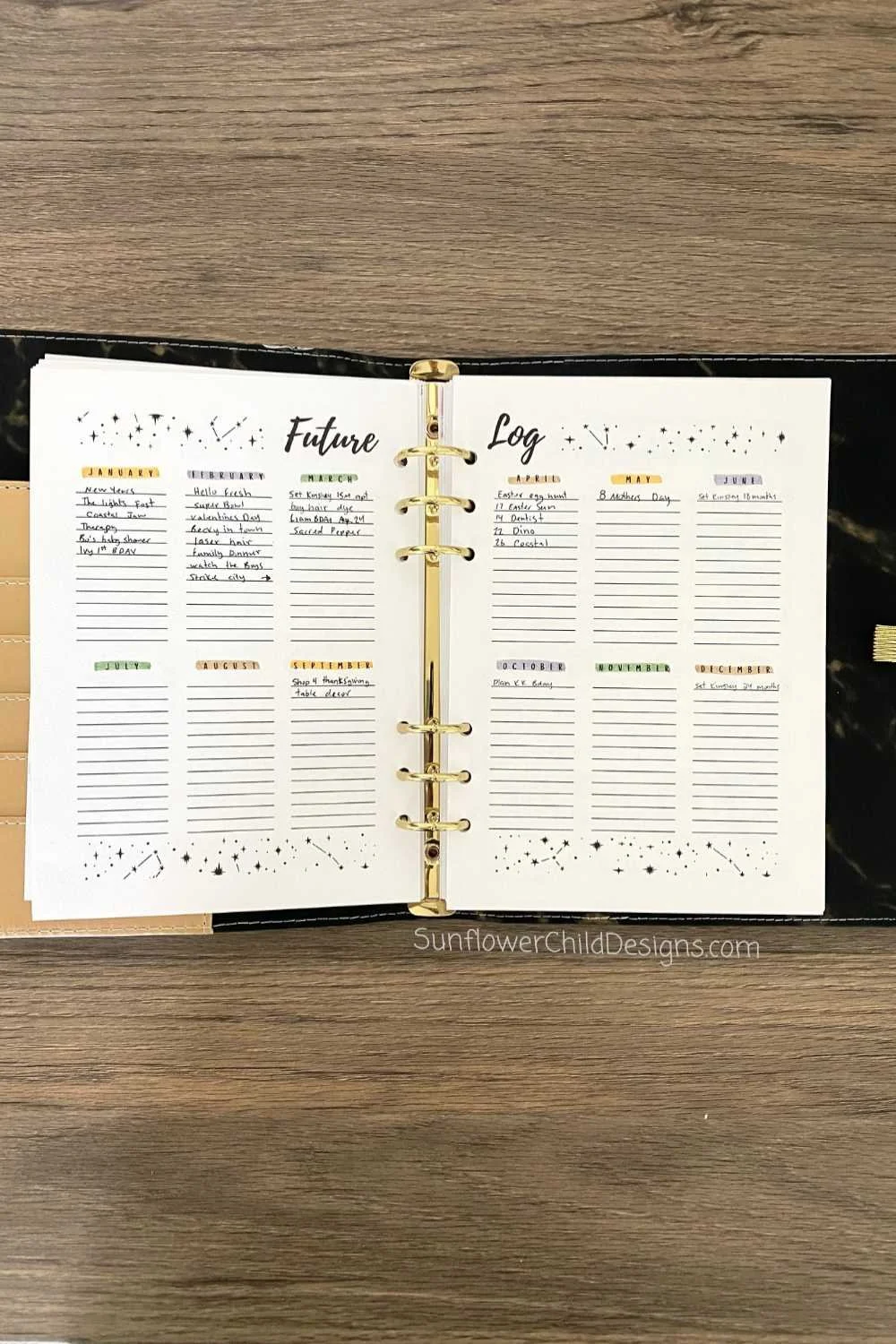
Step 2: Add a Future Log
A future log is a simple yearly overview where you can write important dates coming up later in the year.
This could include:
• Birthdays
• Appointments
• Trips
• Events
It prevents you from forgetting long-term plans. I personally stopped using this spread as I use an online calendar for important events.
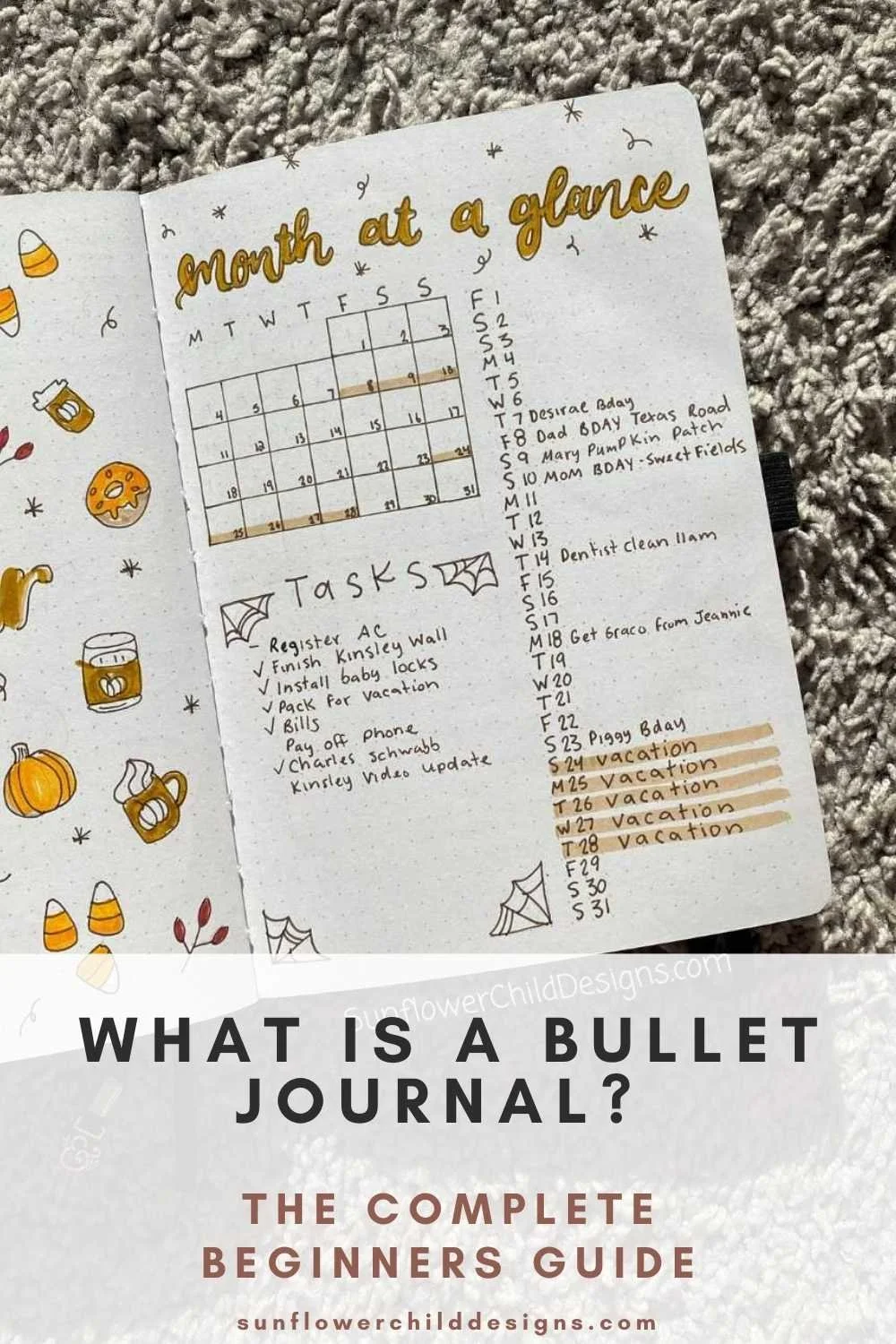
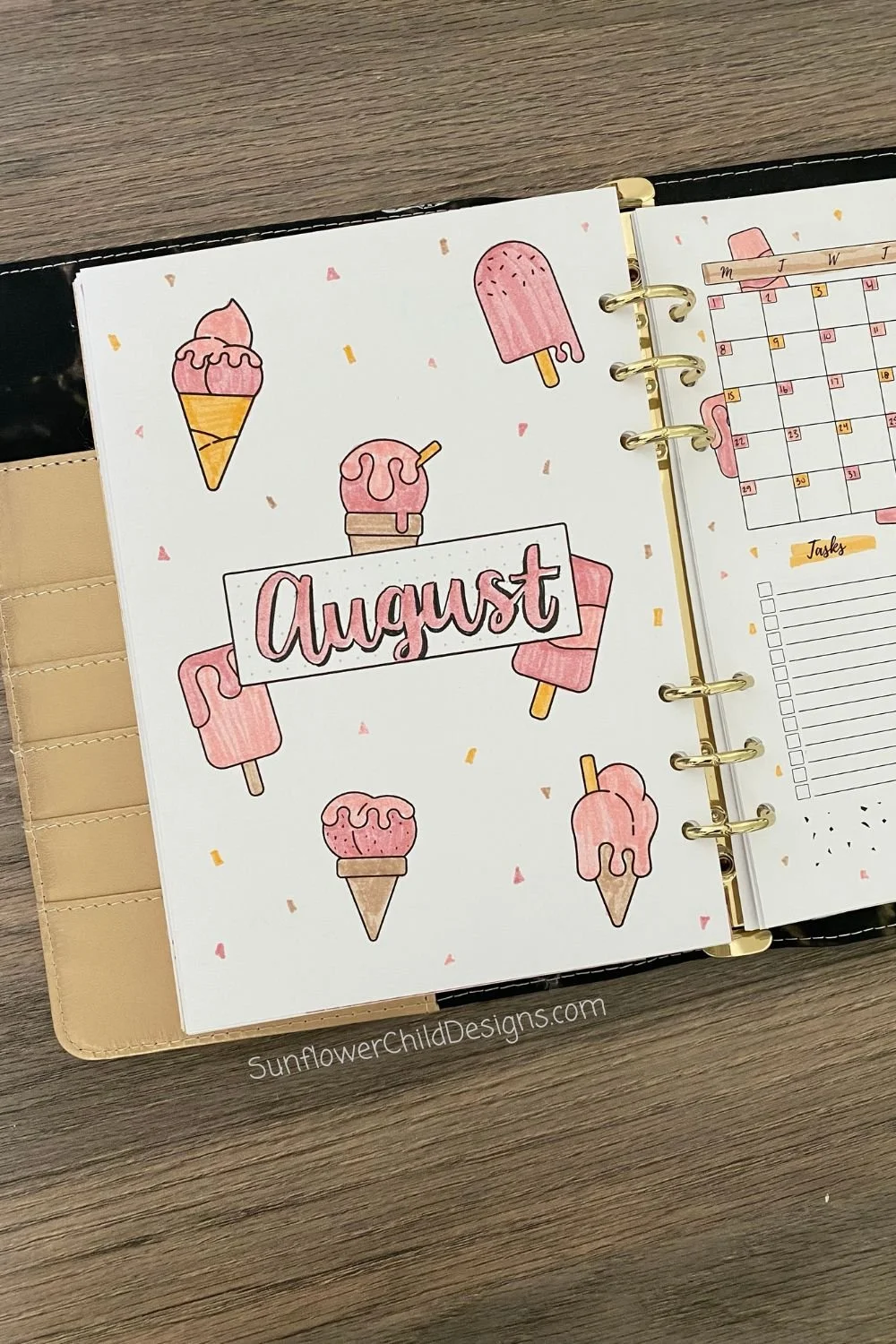
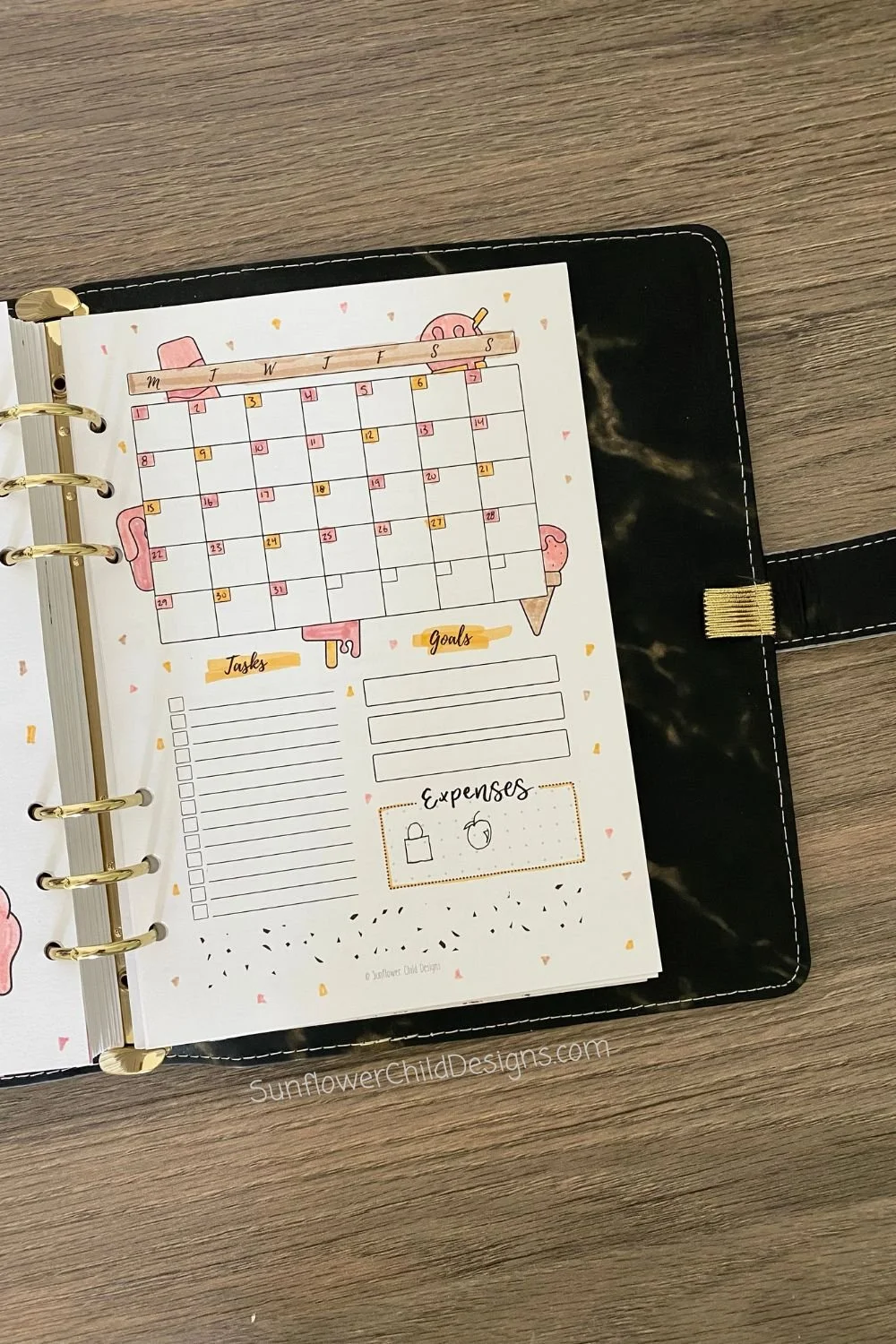
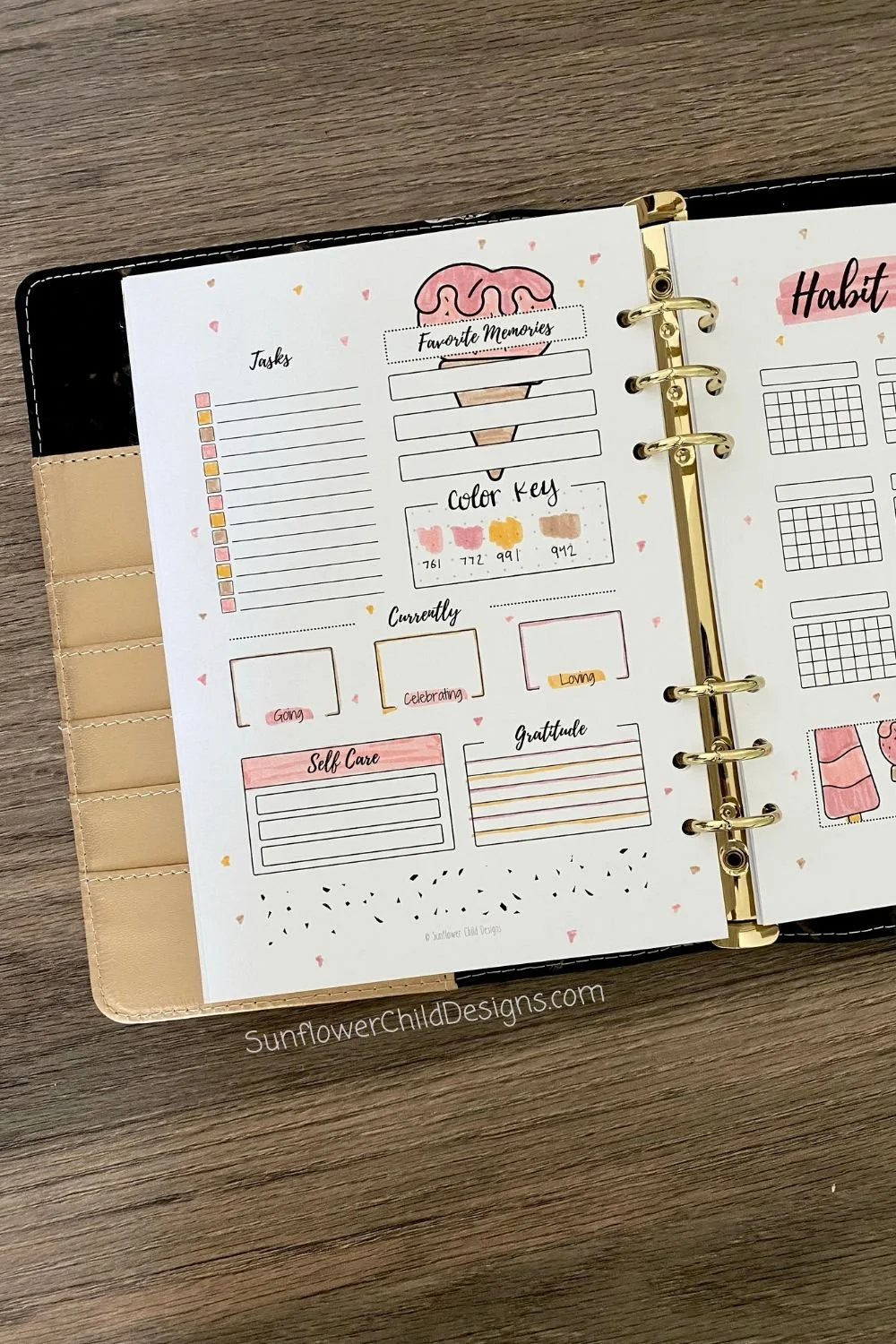
Step 3: Set Up Your Monthly Spread
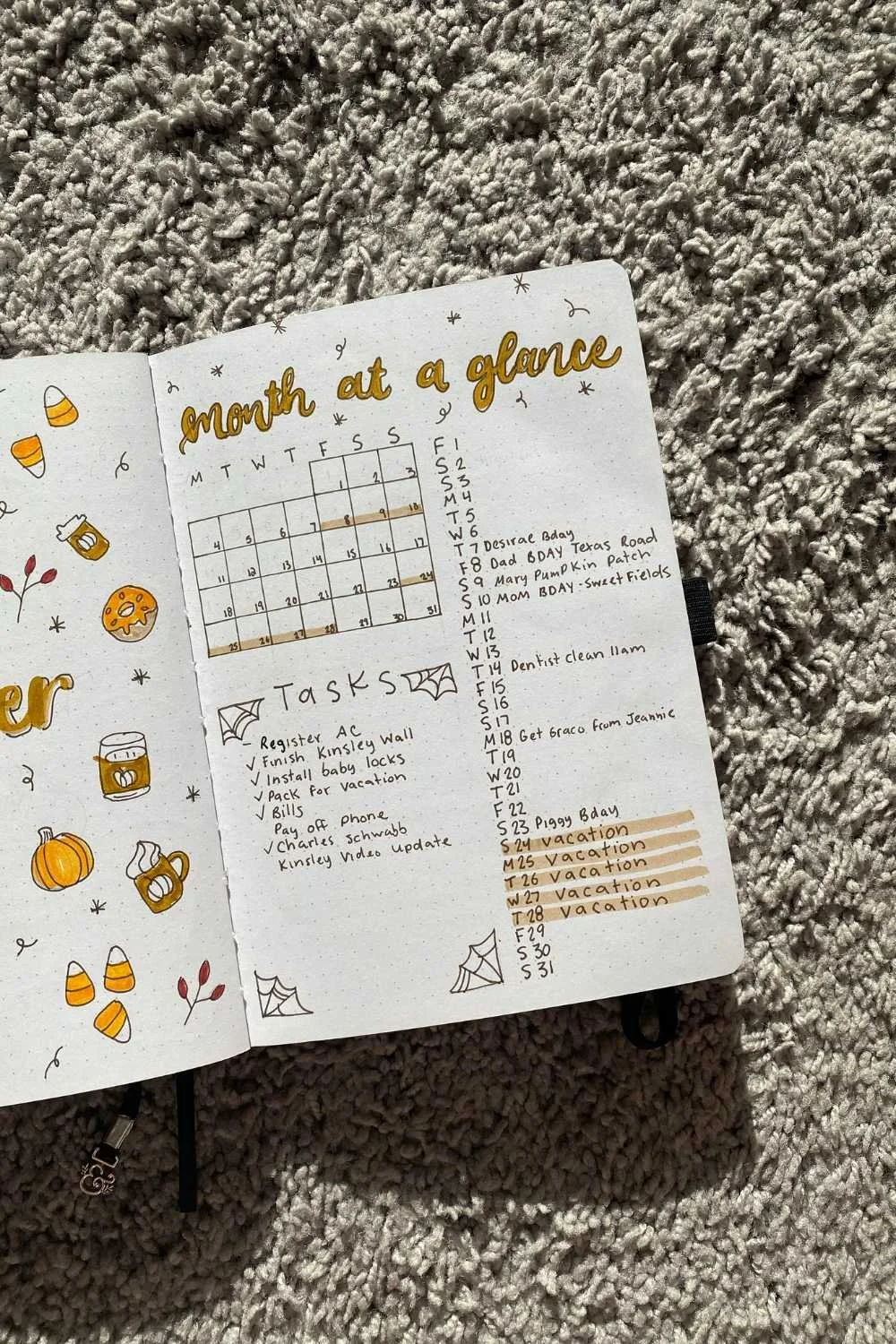
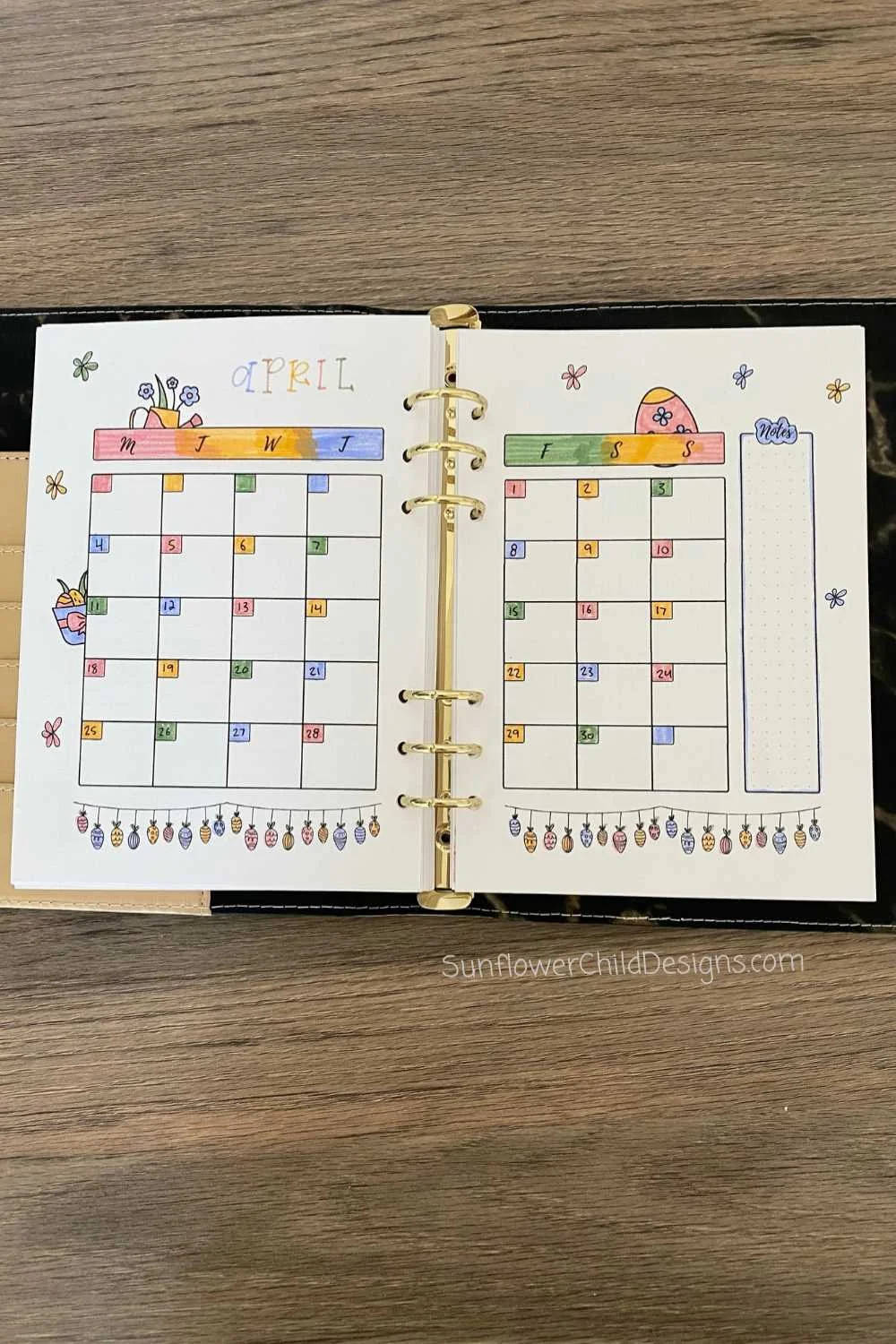
Your monthly spread is the heart of your bullet journal.
Common elements include:
• Calendar layout
• Monthly goals
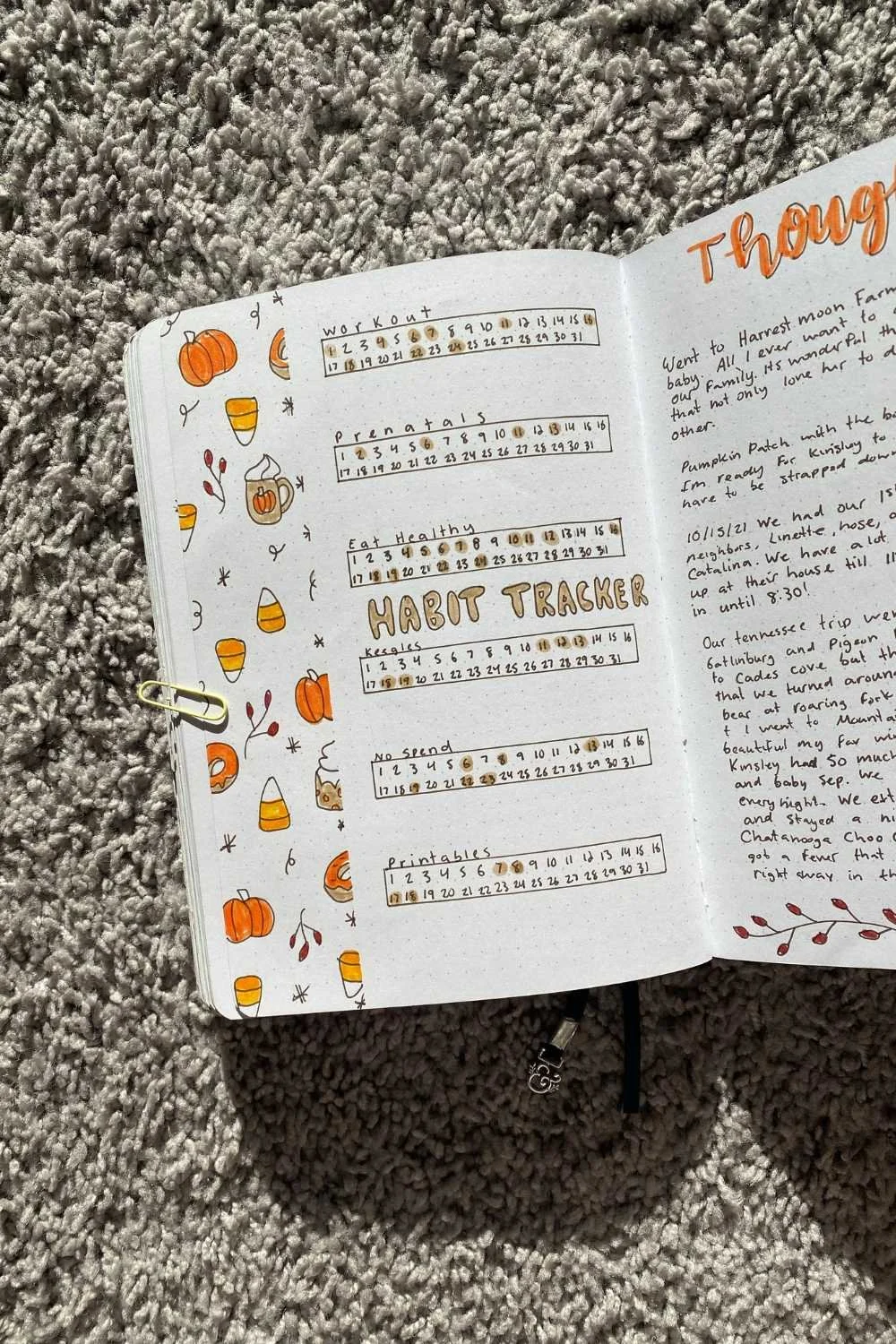
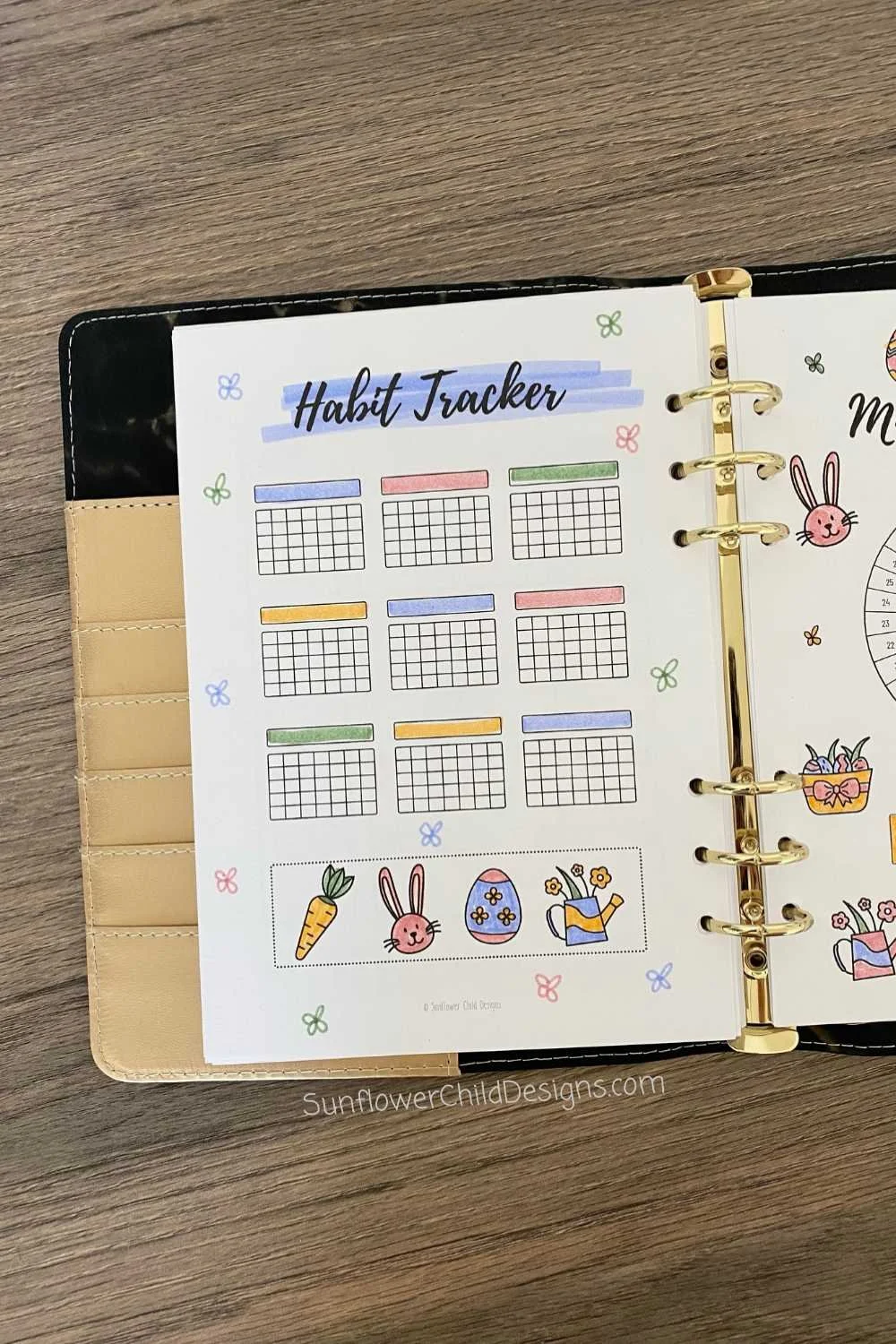
• Habit tracker
• Notes section
• To-do list
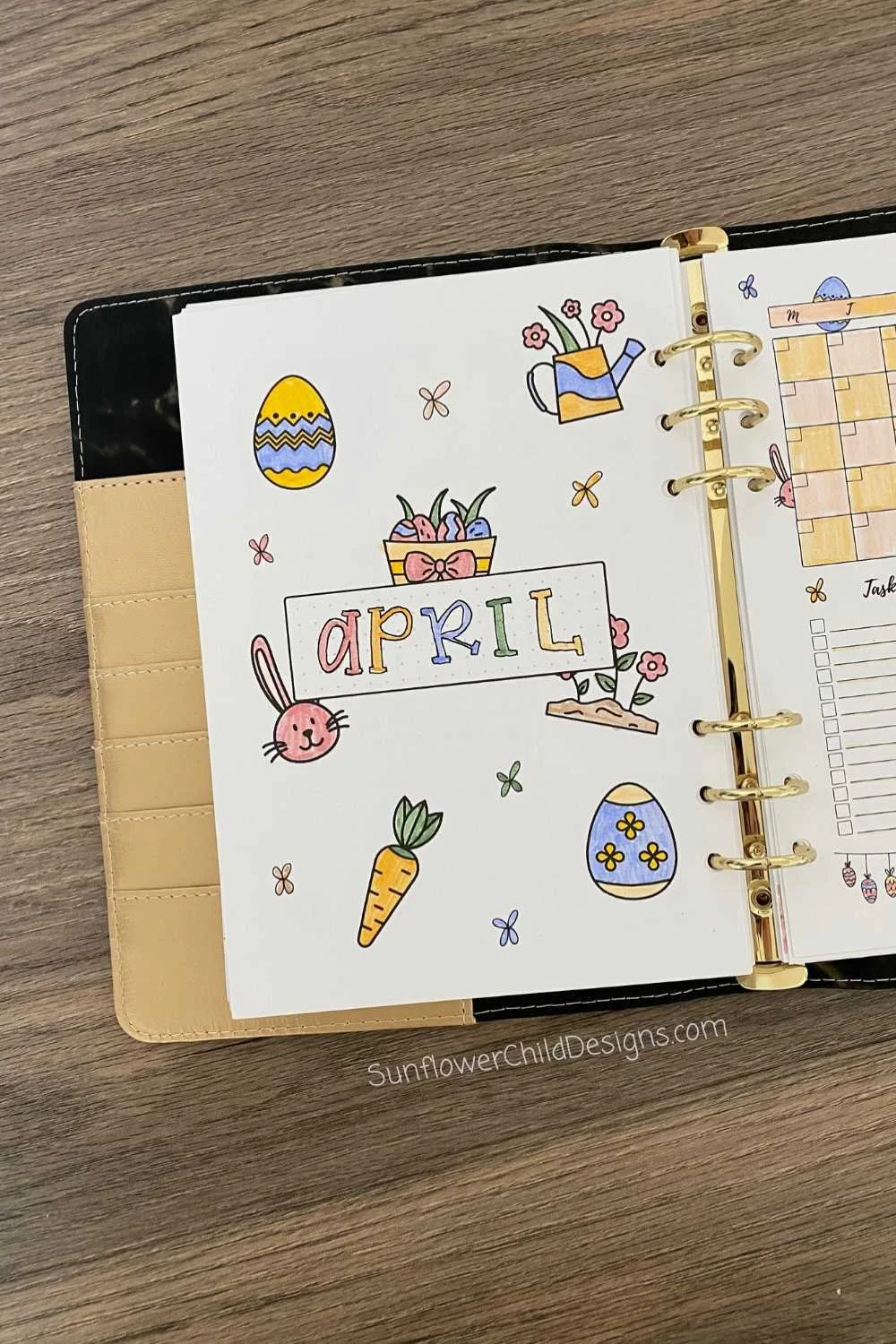
Keep your first monthly layout simple. You can always experiment with themed spreads later. If this is taunting you can use printables.
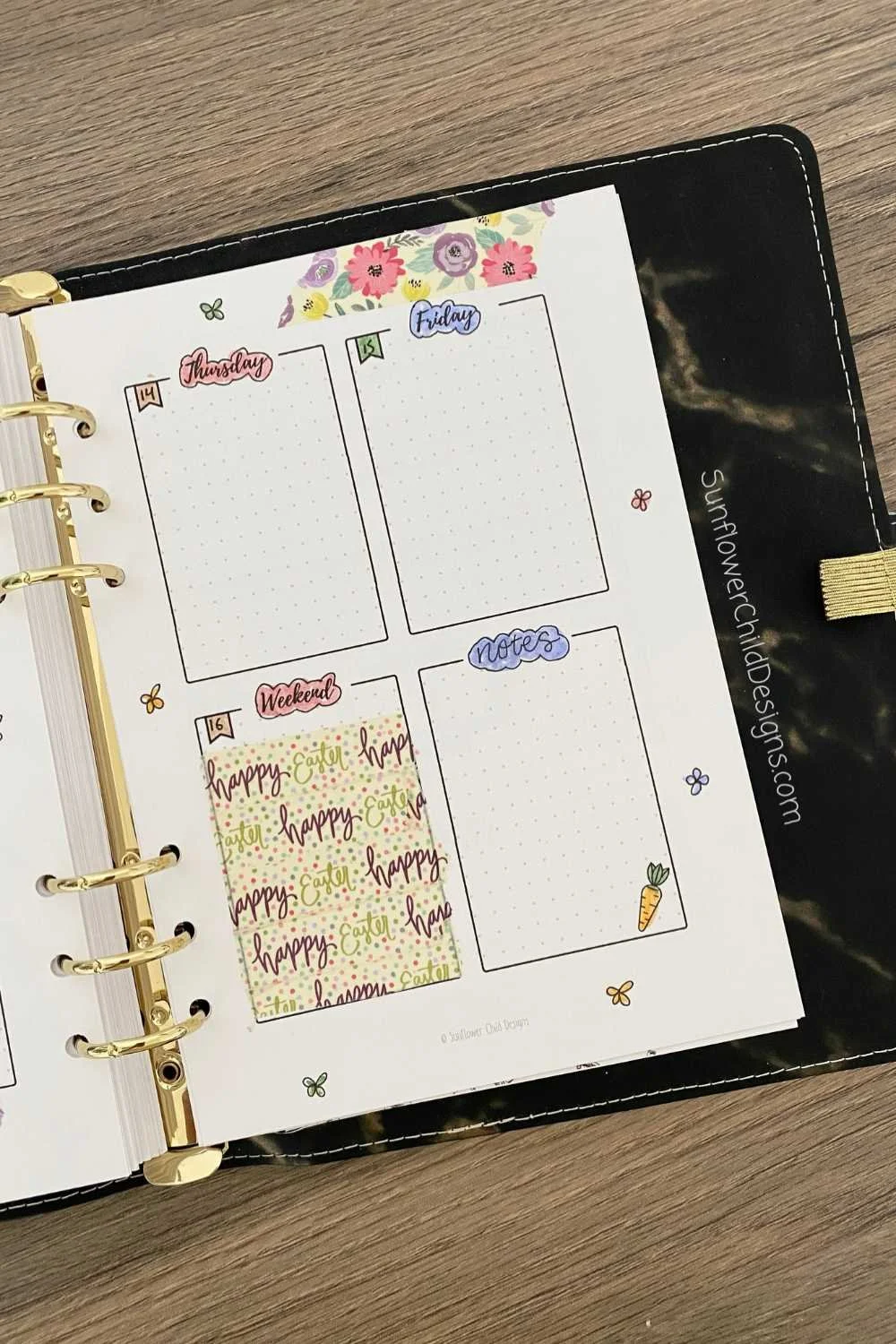
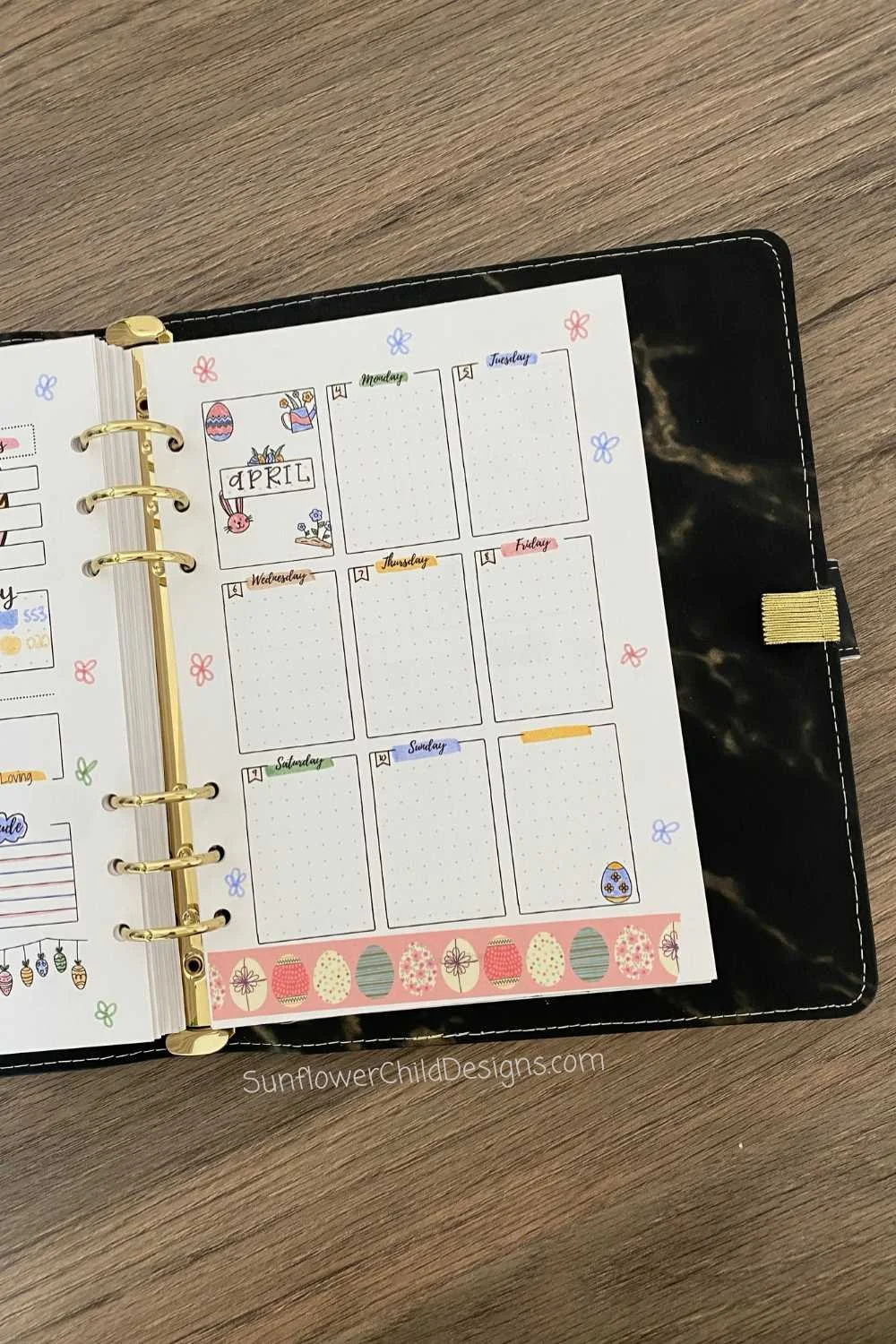
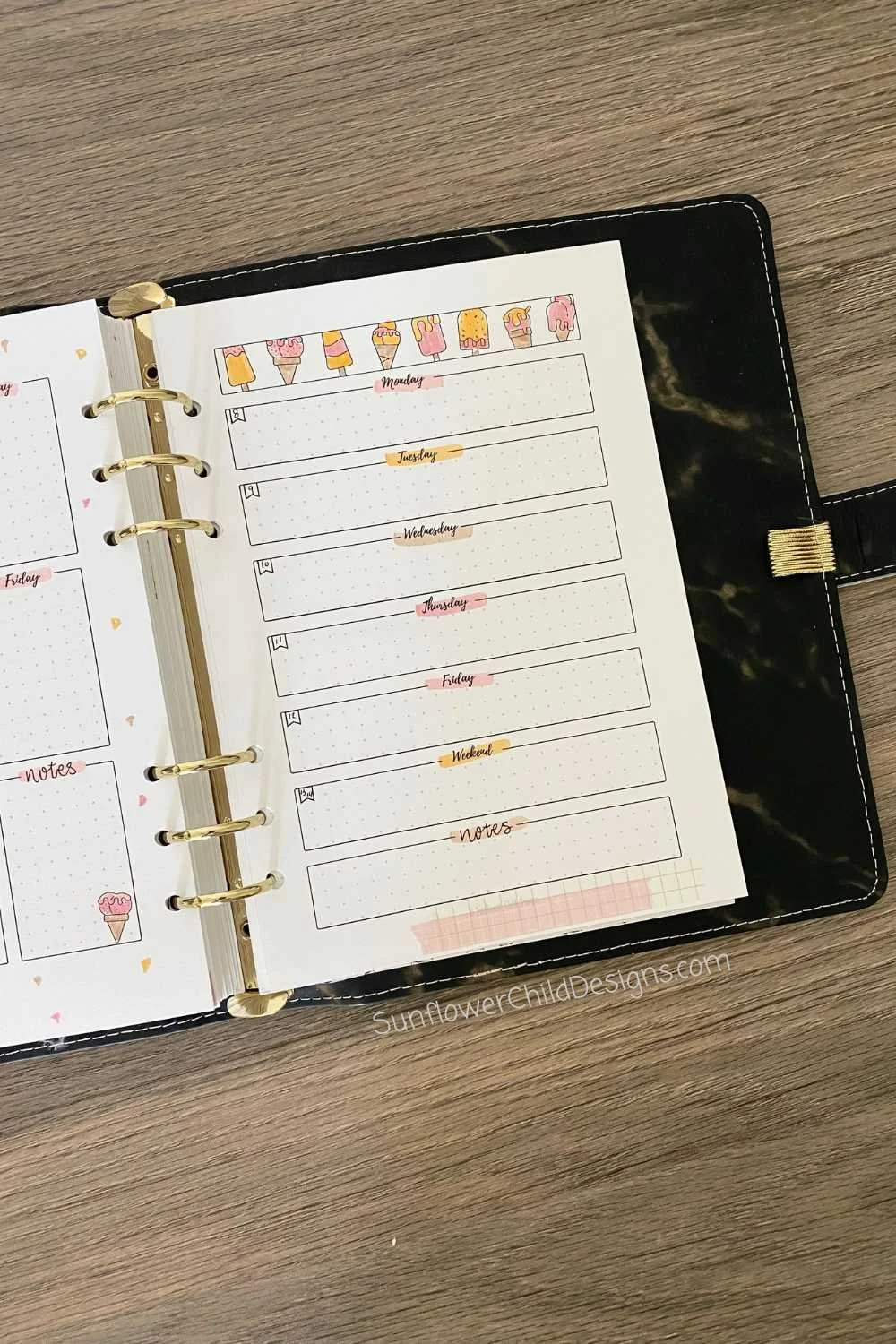
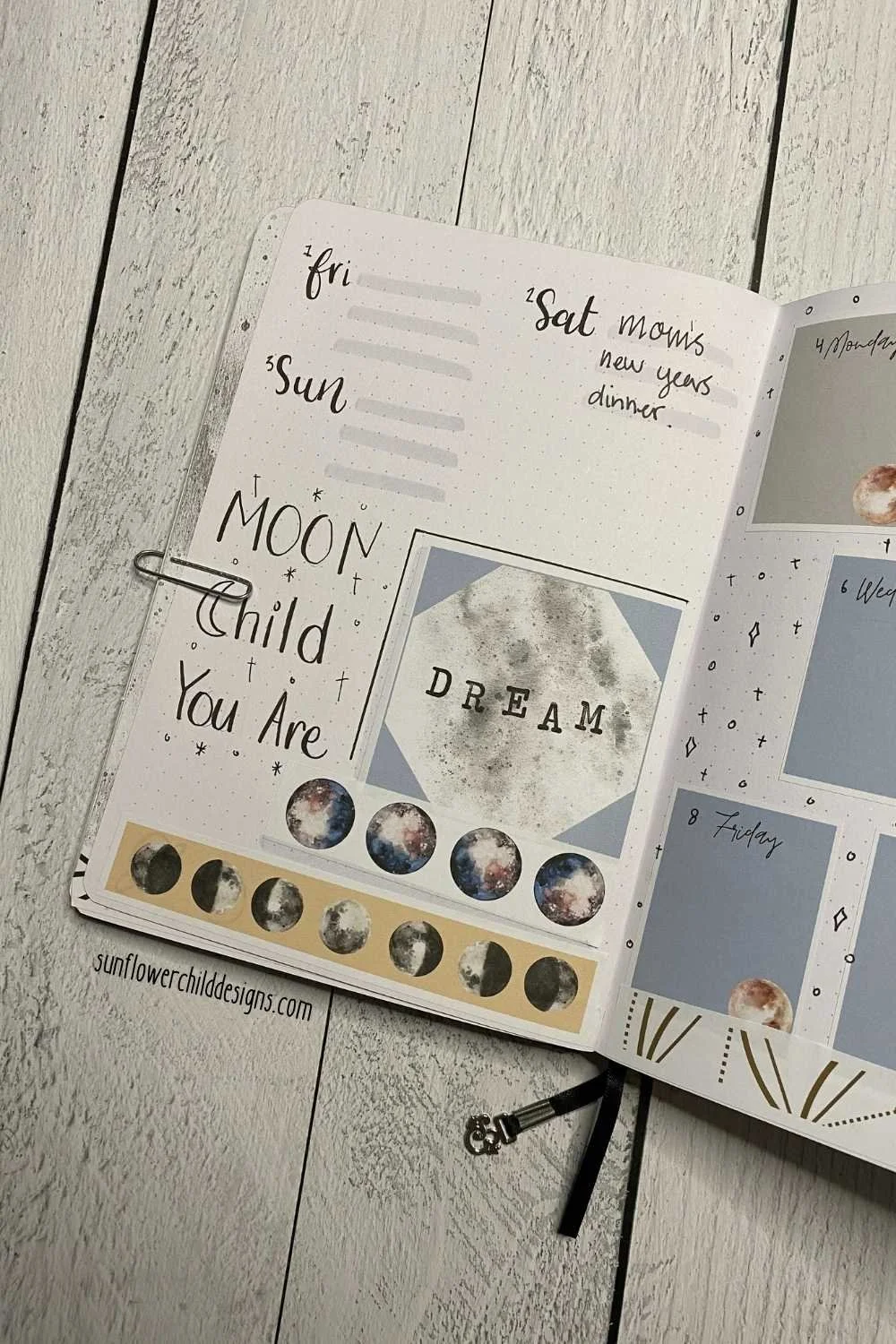
Step 4: Create Weekly or Daily Logs
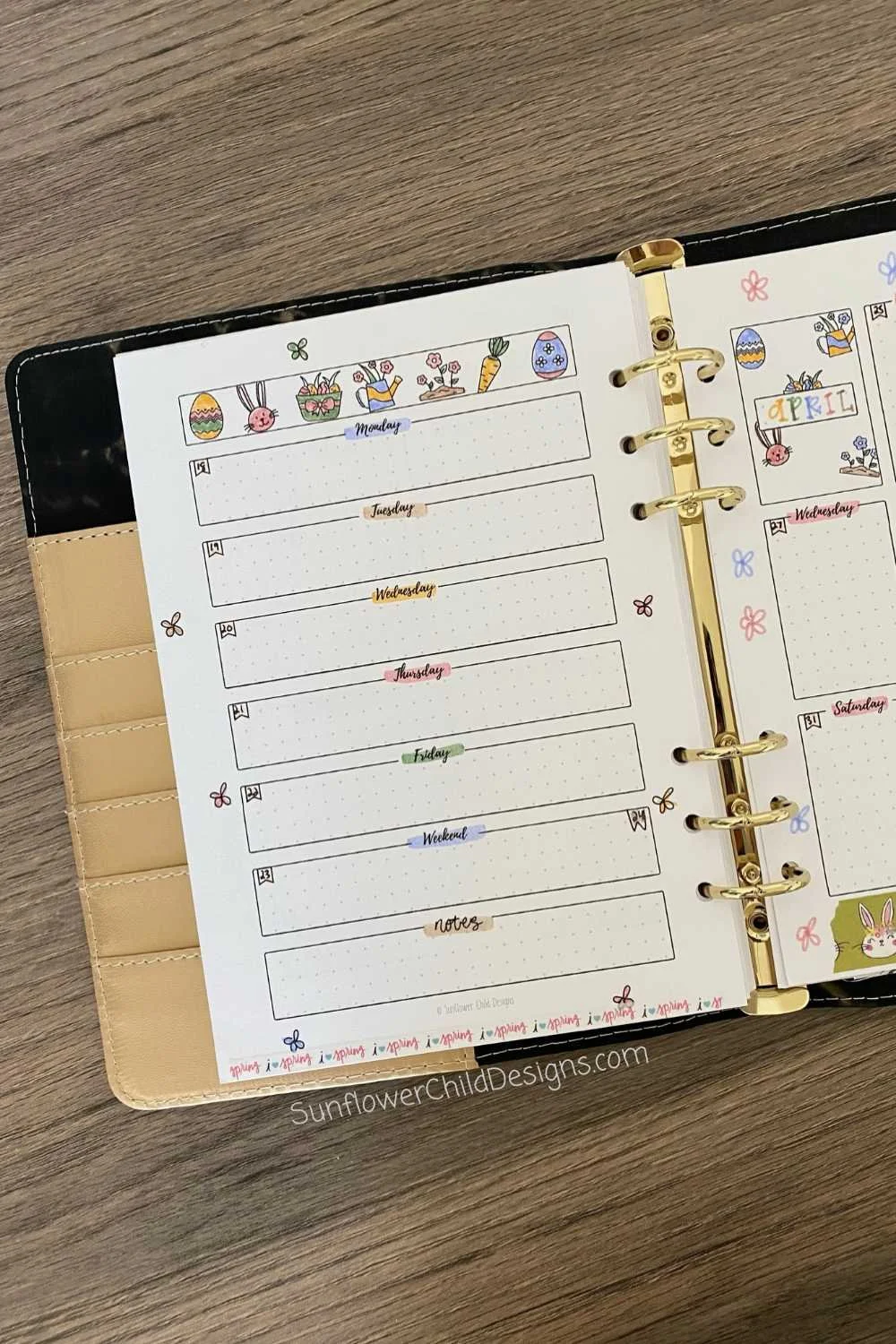
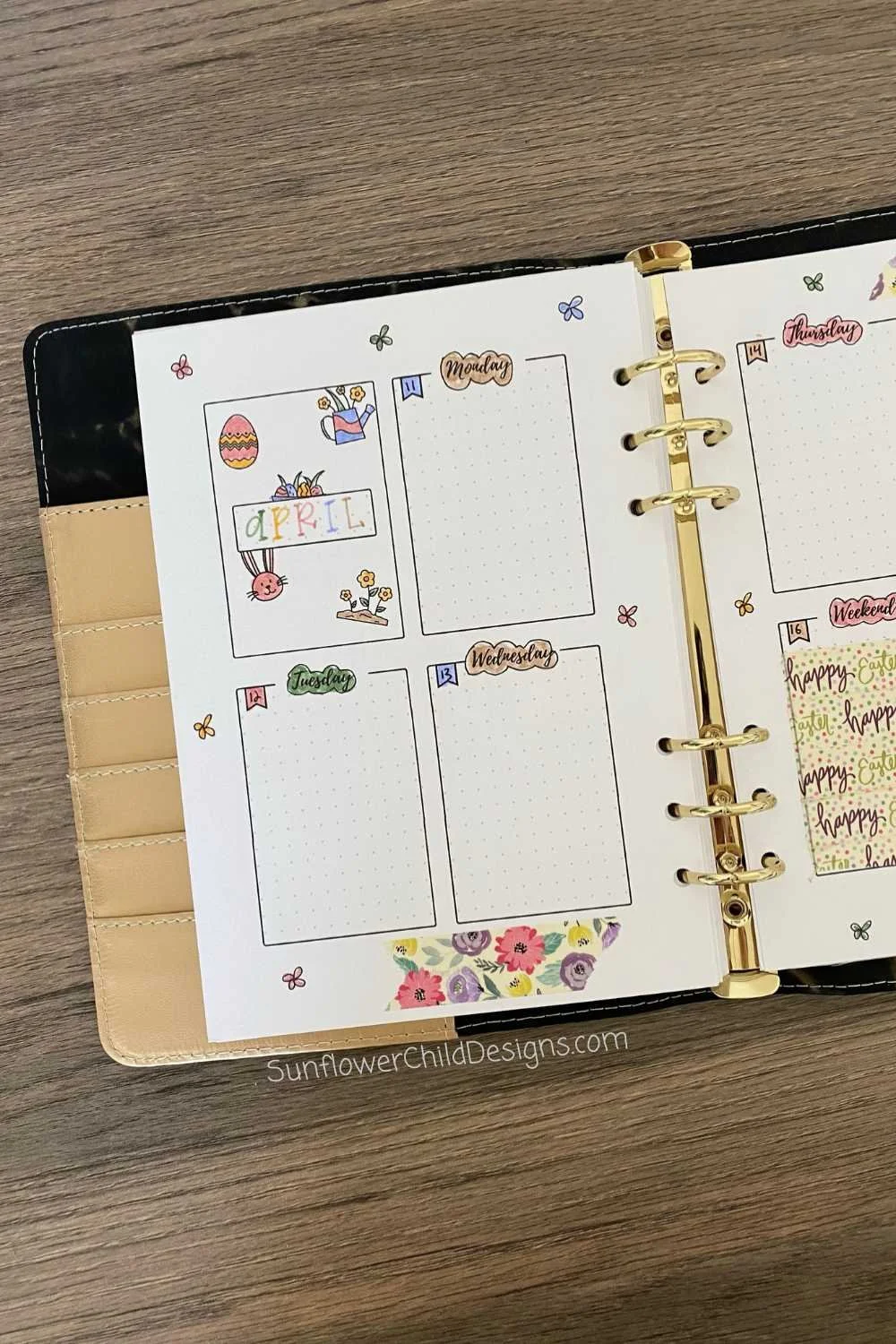
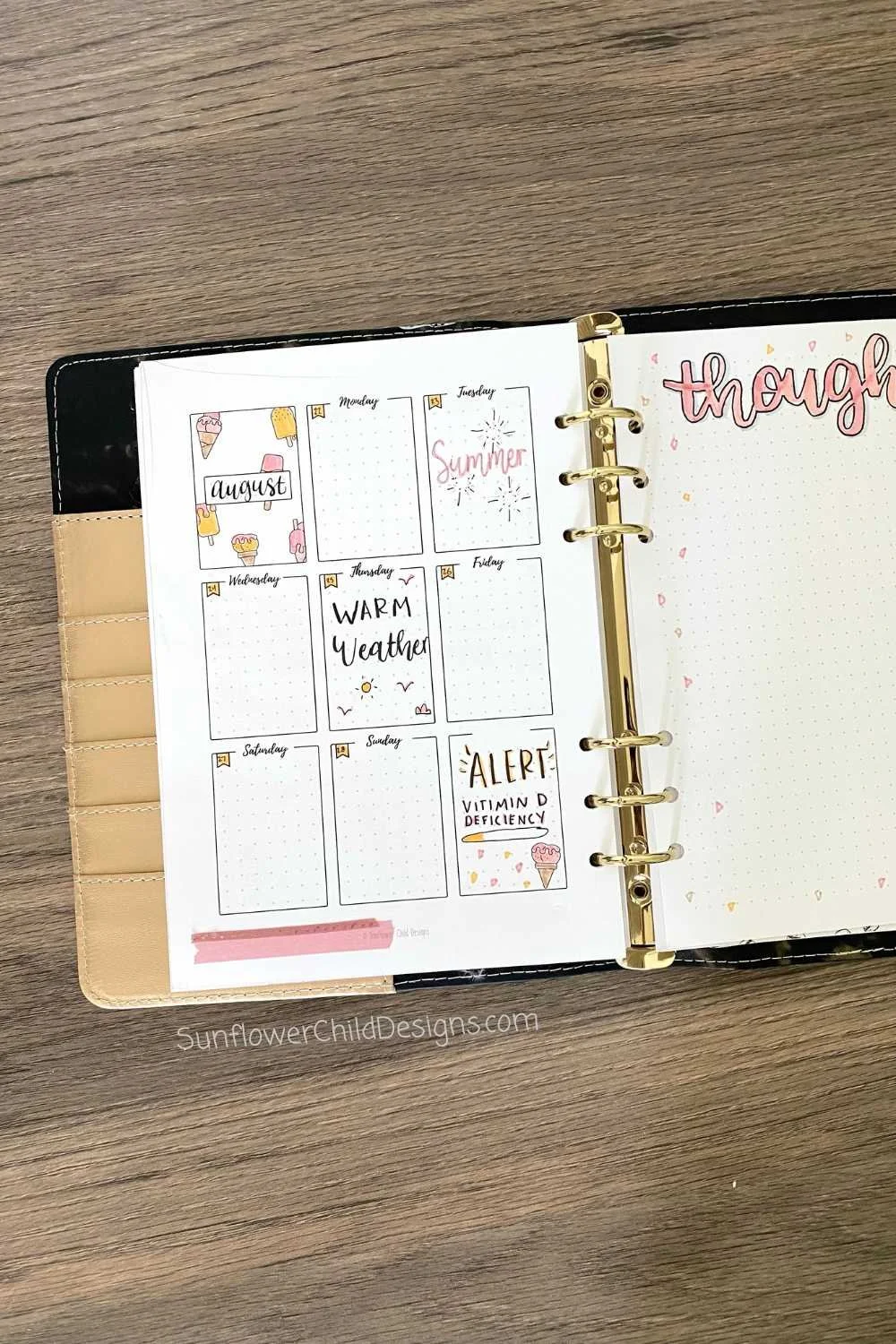
Some people prefer weekly spreads where each week has its own layout.
Others prefer daily logging, writing each day as it comes.
A simple daily log might include:
• Tasks
• Appointments
• Notes
• Gratitude
There’s no rule that says you must do both.
Pick what feels sustainable.
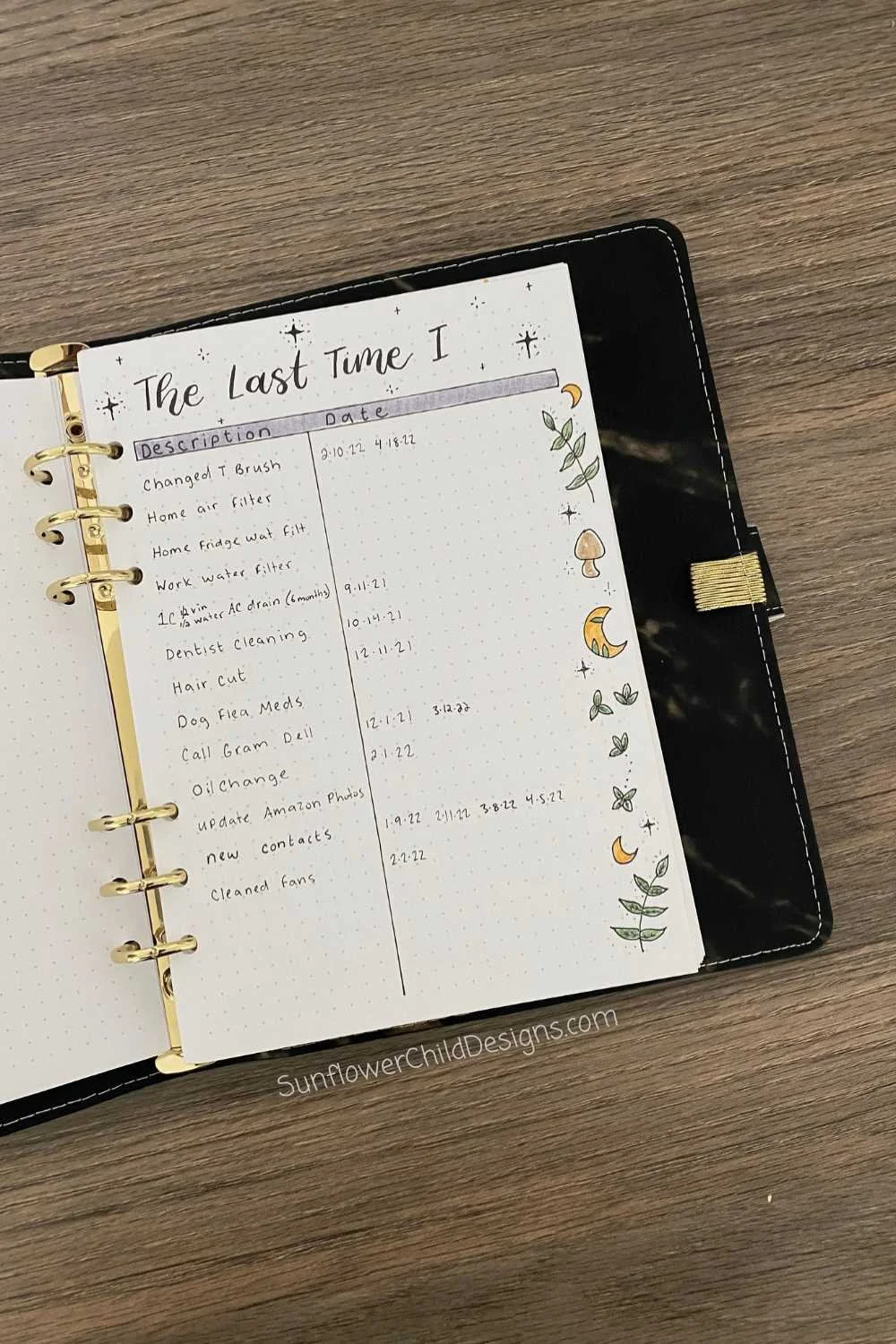
Step 5: Add Collections
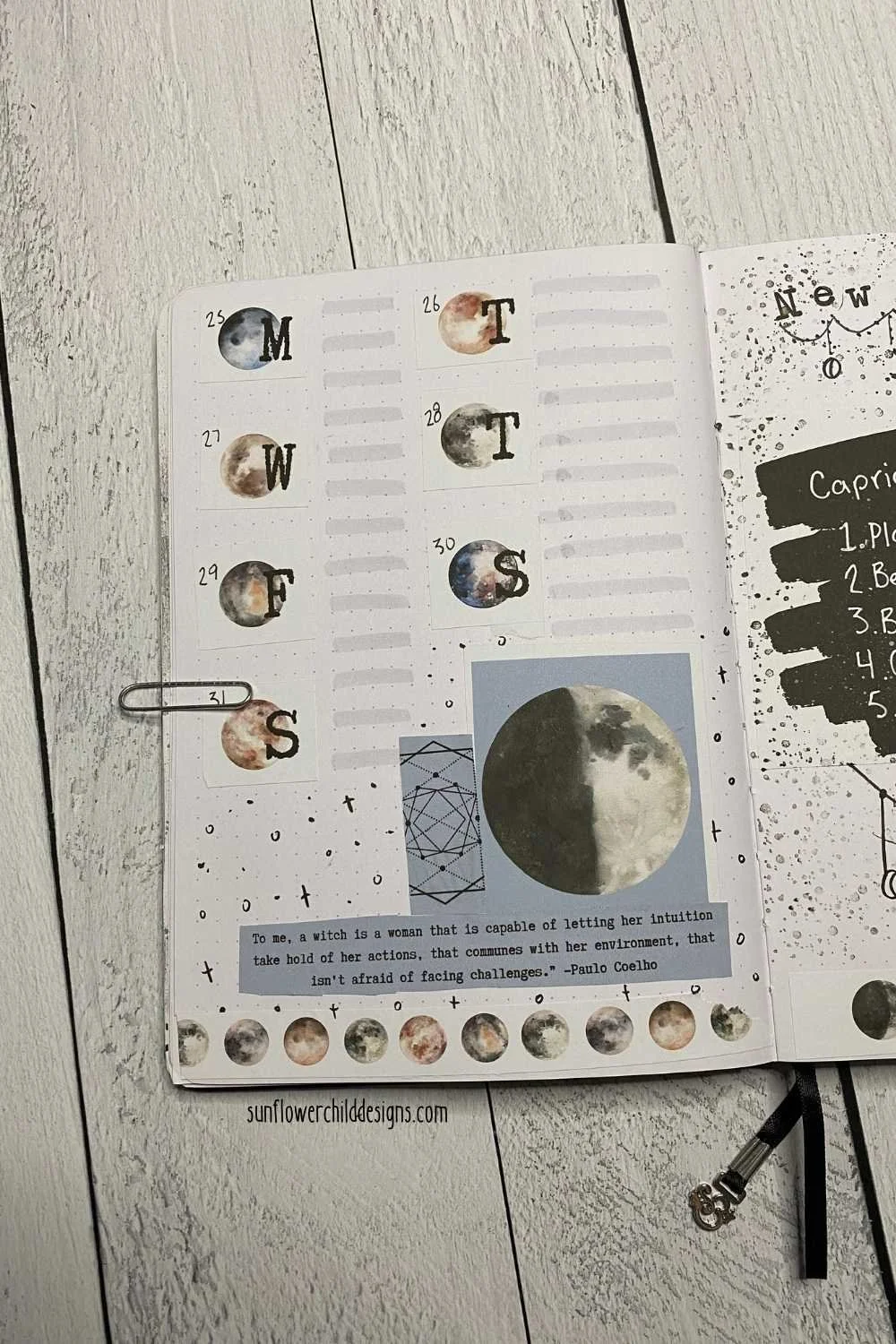
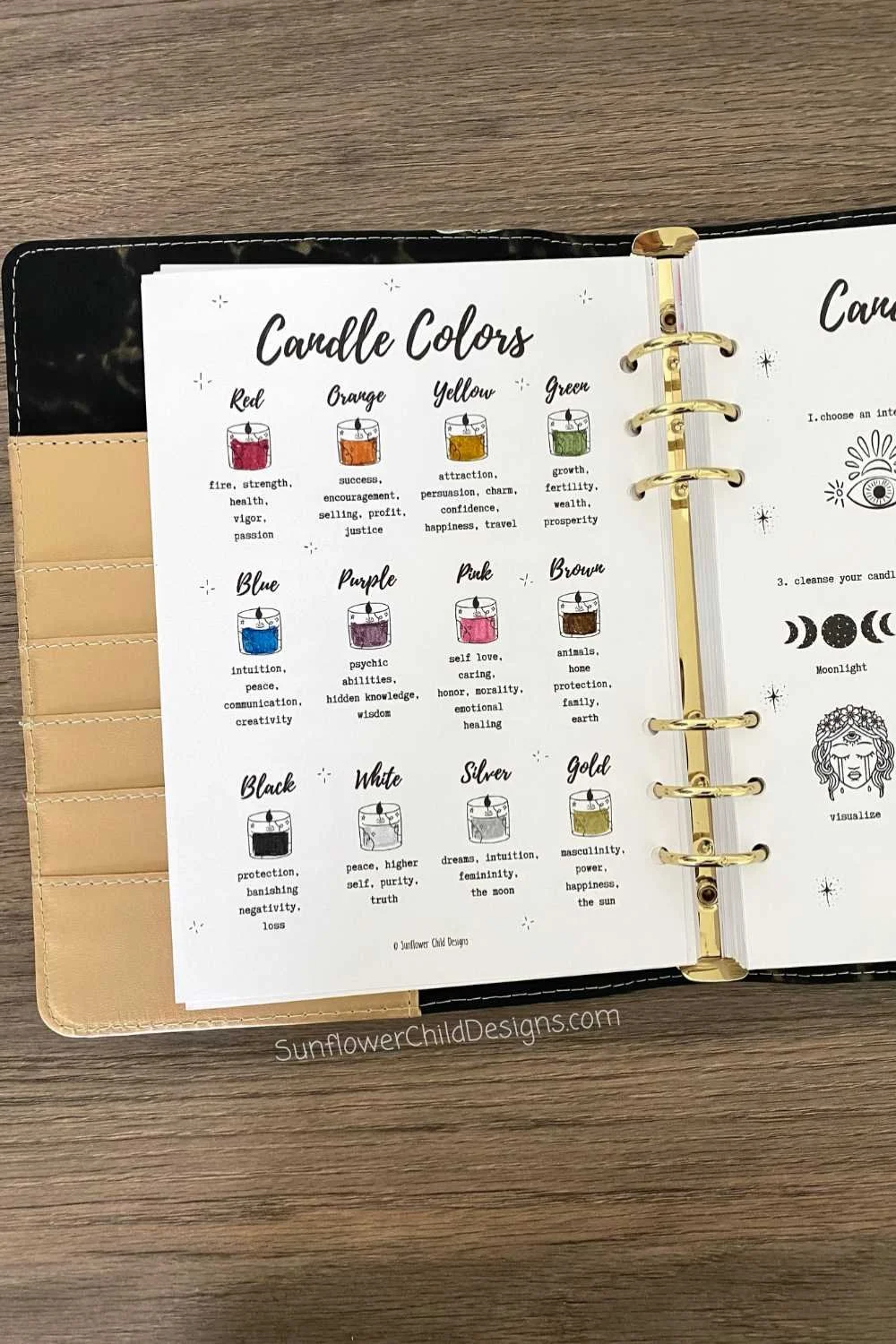
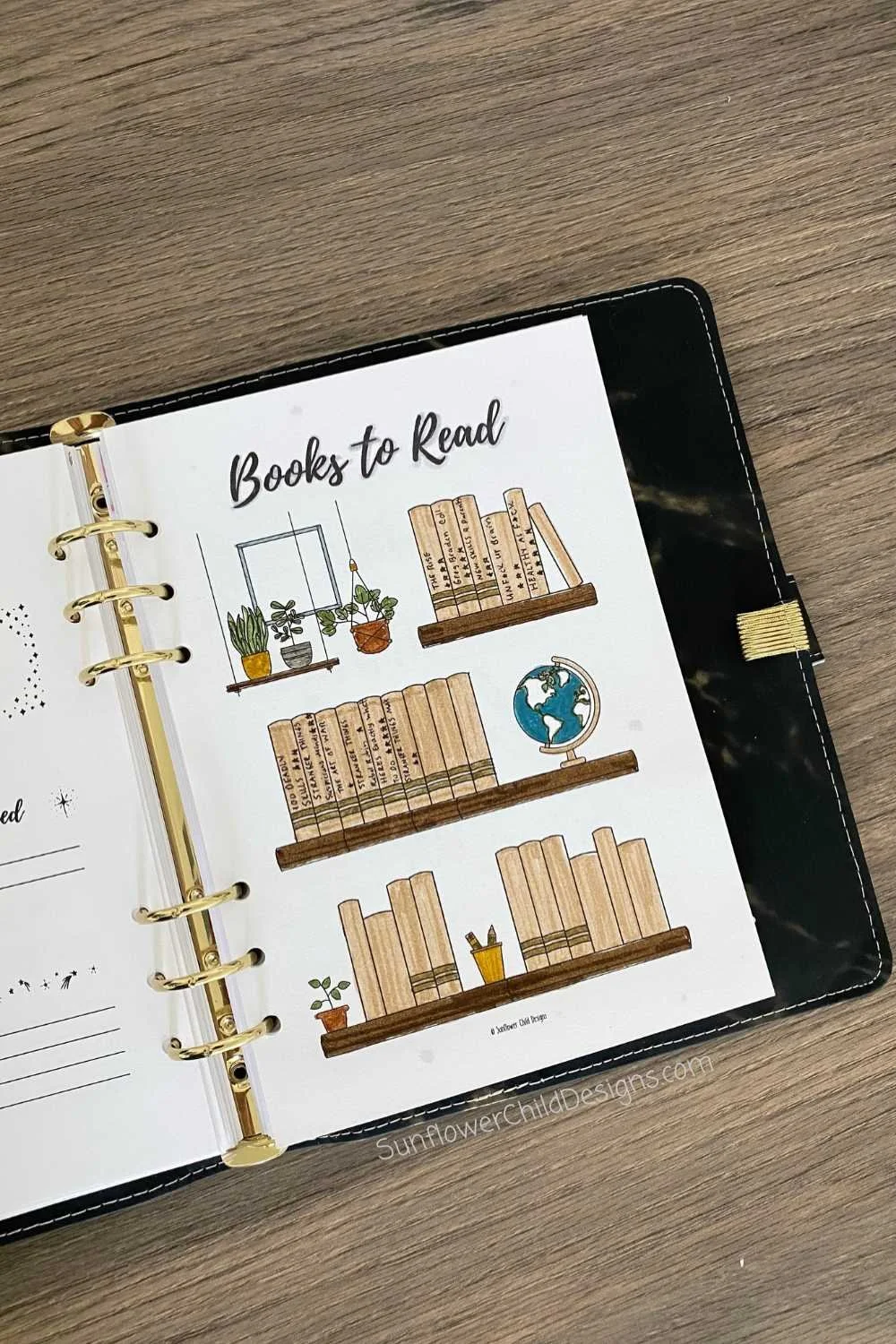
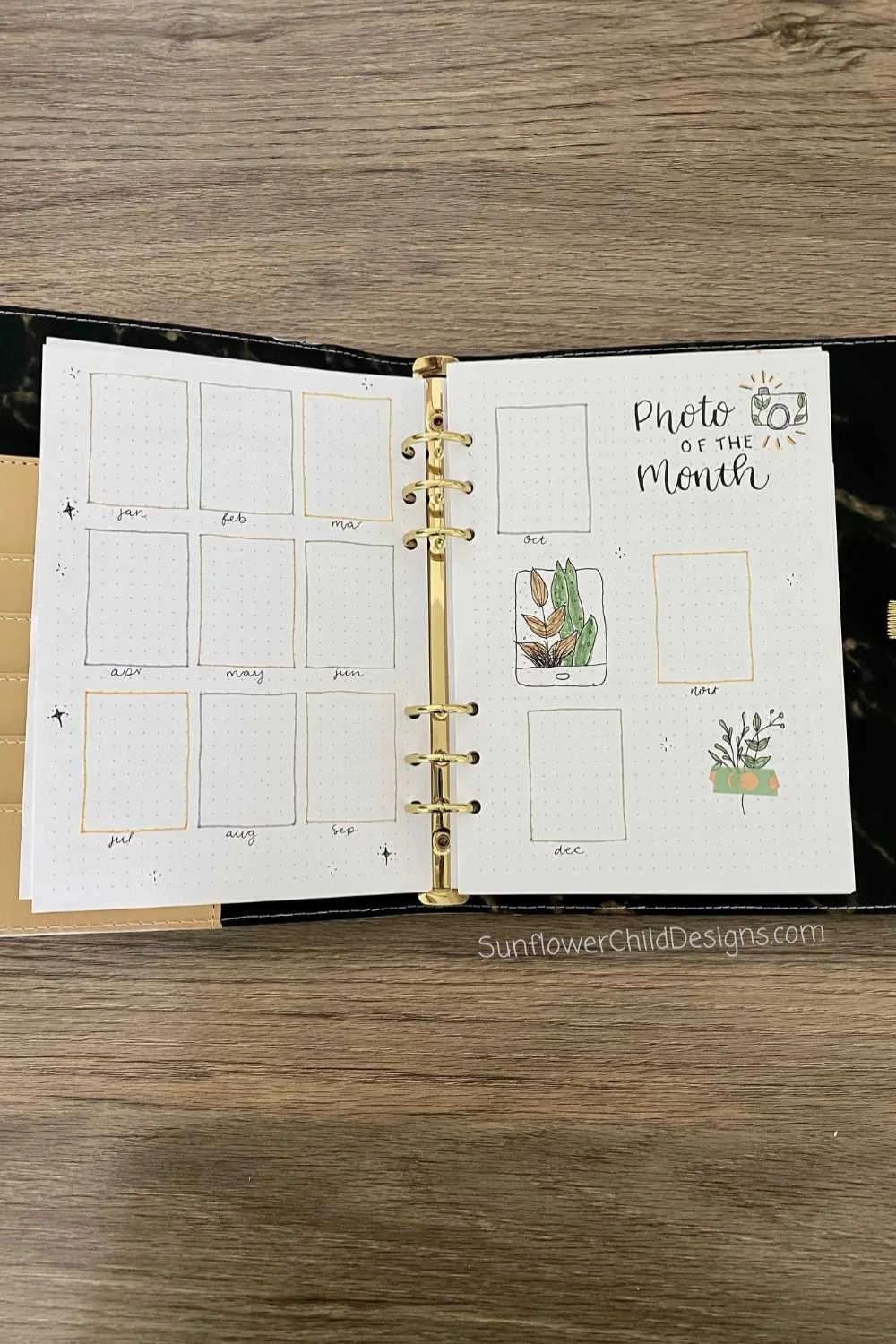
Collections are custom pages dedicated to a specific topic.
Beginner-friendly ideas:
• Reading log
• Mood tracker
• Budget tracker
• Fitness tracker
• Brain dump page
• Content planning page
These pages make your bullet journal uniquely yours.
Easy Bullet Journal Page Ideas for Beginners
If you’re staring at a blank page wondering what to create first, here are simple ideas:
• Monthly calendar
• Weekly layout
• Habit tracker
• Goal-setting page
• Gratitude log
• Sleep tracker
• Bujo ideas page
You do not need 20 spreads to start.
Start with 3–5 pages and build from there.
Do You Have to Be Artistic?
Absolutely not.
This is one of the biggest misconceptions about bullet journaling.
You do NOT need:
• Calligraphy skills
• Doodling abilities
• Fancy lettering
Some of the most effective bullet journals are minimal and clean.
If you want creativity without pressure, printable planner stickers and pre-designed pages can make setup easier.
That’s why I love using printables — they give structure without stress.
Common Beginner Mistakes (And How to Avoid Them)
Mistake #1: Trying to Make It Perfect
Your journal is meant to be used, not displayed. Messy is fine. Crooked lines are fine. Progress over perfection.
Mistake #2: Doing Too Much at Once
Start small. Add new spreads only when you need them. Overloading your first month can lead to burnout.
Mistake #3: Comparing Yourself to Pinterest
Pinterest shows curated pages. Your bullet journal is for your real life.
Bullet Journal Tips for Beginners
Bullet journaling works best when it evolves with you. There is no perfect formula — just the system that supports your real life. Here are practical, realistic tips to help you stay consistent and actually enjoy the process.
1. Start Simple and Give Yourself Grace
If you feel nervous about putting pen to paper, use pencil first. Begin with one month at a time instead of planning an entire year. Leave blank space if you’re unsure what you’ll need later. Track only what truly matters to you, and review your spreads at the end of the month to see what worked and what didn’t. Your journal should grow with you — not overwhelm you.
2. Have Fun and Don’t Compare Yourself to Others
Bullet journaling is meant to be enjoyable. Don’t force yourself to create the “prettiest journal ever.” Pinterest and Instagram are full of beautiful spreads, but your journal is for your life. Everyone is on their own journey. Focus on function first — aesthetic can come later if you want it.
3. Create a Journaling Habit
It’s easy to fall out of the routine — it happens to all of us. I personally update my bullet journal about once a week. Busy mom life! I like to schedule my bujo time for Sunday mornings when my husband can watch the baby. That’s my quiet creative time. Set a reminder if you need to. Even when you don’t feel like journaling, once you sit down and start, it usually becomes fun again. Add bullet journaling to your habit tracker to stay accountable.
4. Supplement With an Online Calendar
Let’s be real — your bullet journal won’t always be with you, and it can’t send reminders like Google Calendar can. I add all my appointments to Google Calendar and set multiple notification reminders so I don’t forget. Your digital calendar and bullet journal can work together beautifully. I have a Sanity-Saving Task + Planning System I Use Every Single Day.
5. Use Your Phone Notes for Journal Ideas
Ideas rarely happen when your notebook is in front of you. When something pops into your head, jot it down in your phone notes. Later, transfer it into your journal. For example, I once quickly typed “Kinsley says up!” so I wouldn’t forget to add that sweet milestone to her page. Those little details matter.
6. Learn Lettering and Doodling (If You Want To)
If you want to improve your lettering or drawing skills, there are tons of free YouTube tutorials and affordable books available. Practicing brush lettering or simple florals can build confidence — but remember, it’s completely optional. Check out the lettering section in the All-in-One Life Planner. Your bullet journal does not require artistic talent to be effective.
7. Experiment and Be Creative
Try new spreads. Test out trackers you’re unsure about. I used to think mood trackers were pointless — until I tried one and loved coloring it in. If something doesn’t work for you, stop using it. Some of my favorite spreads are ones I’ve invented or modified. Make your journal uniquely yours.
8. Invest in Quality Supplies (Within Reason)
You don’t need expensive tools, but having supplies you love can make journaling more enjoyable. A sturdy notebook or binder is the backbone of your system. Good pens that don’t bleed through paper can make a big difference too.
9. Join the Bullet Journal Community
Connecting with others can be incredibly motivating. Instagram is a great place to share your spreads and follow other bullet journalers. Use hashtags like #bulletjournal to discover new ideas. There are also Facebook groups and TikTok communities full of inspiration.
10. Encourage and Support Others
Be kind and supportive in the community. Like posts, leave thoughtful comments, and ask questions. I’ve discovered some amazing supplies just by asking, “What pen is that? It’s beautiful!” The bullet journal world is full of creative, helpful people — and encouragement goes a long way.
Want Free Planner Printables?
If starting from scratch feels overwhelming, I’ve created free planner printables and printable stickers to help you begin.
They’re perfect for:
• Clean monthly layouts
• Structured weekly pages
• Decorative themes
• Easy beginner setups
Scroll below to sign up and download your free printables.
They make it so much easier to start your bullet journal today.
You can also check out the Free section in my shop!
Final Thoughts: Just Start
The hardest part of bullet journaling is starting.
Once you begin, you’ll quickly discover what works and what doesn’t.
Remember:
You don’t need to be artistic.
You don’t need expensive supplies.
You don’t need a perfect layout.
You just need a notebook and a willingness to try.
Your bullet journal should support your life — not stress you out.
Start simple.
Stay consistent.
Adjust as you go.
You’ve got this.
Frequently Asked Questions About Bullet Journaling
What is a bullet journal?
A bullet journal is a customizable planning system that combines a planner, goal tracker, task manager, and journal in one notebook. You design the pages yourself to fit your needs.
How do you start a bullet journal for beginners?
To start a bullet journal, choose a notebook and pen, create a simple monthly spread, add weekly or daily logs, and track what matters to you. Start simple and build from there.
Do you need to be artistic to start a bullet journal?
No, you do not need artistic skills to start a bullet journal. A simple pen and notebook are enough. Creativity is optional and can be added over time if desired.
What supplies do beginners need for bullet journaling?
Beginners only need a notebook and pen to start. Optional supplies include highlighters, brush pens, stickers, and printable planner pages.
What are easy bullet journal ideas for beginners?
Easy ideas include a monthly calendar, weekly layout, habit tracker, gratitude log, goal-setting page, and a brain dump spread.
Printable Planner Pages
It takes a lot of time to create a bullet journal. I started to feel over whelmed so I created many printable planners and printable stickers, etc. The printables range from minimalist to maximalist.
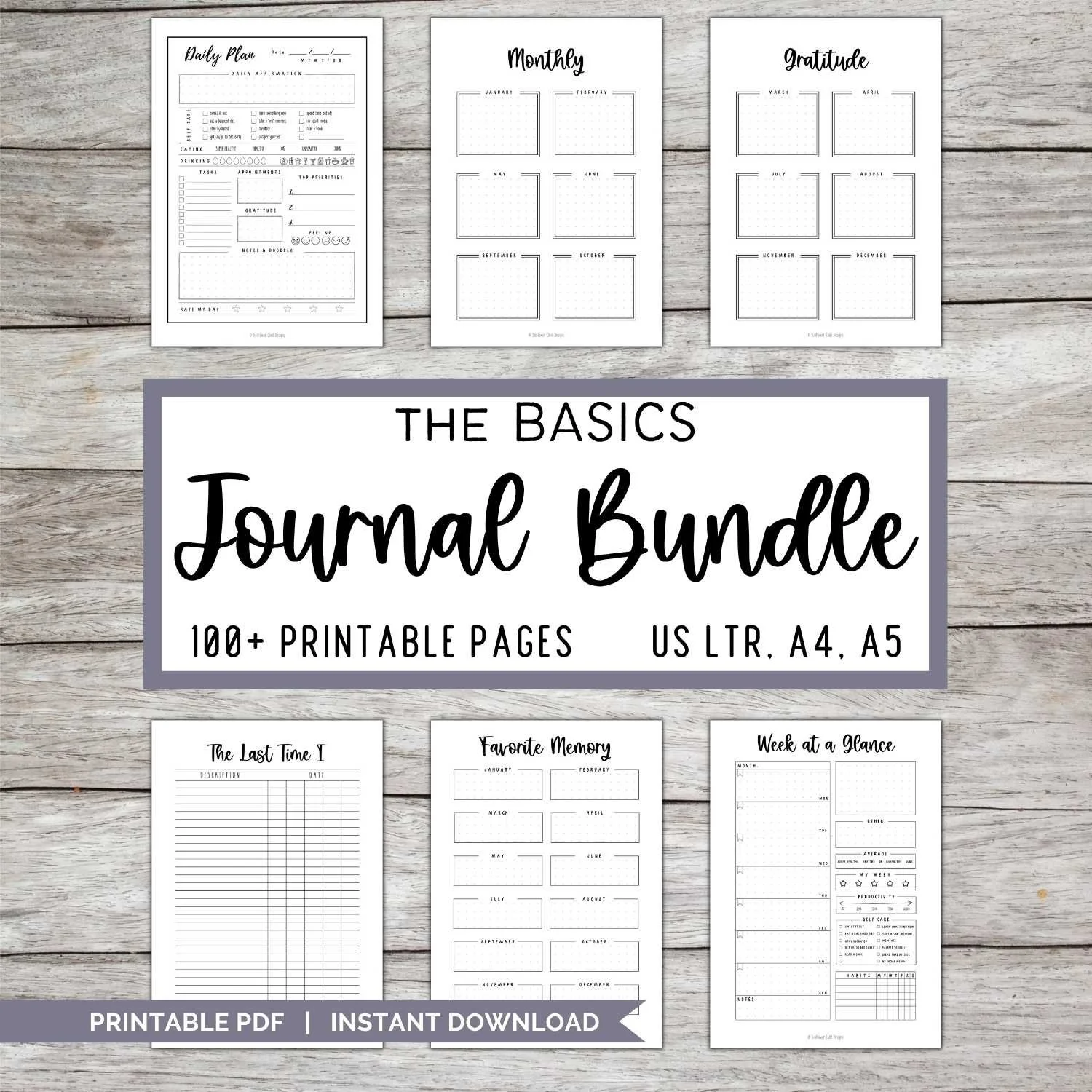
Grab this printable planner bundle today and start your own bullet journal in minutes. The hard work is done for you — simply print the pages and use. No fuss, no designing from scratch.
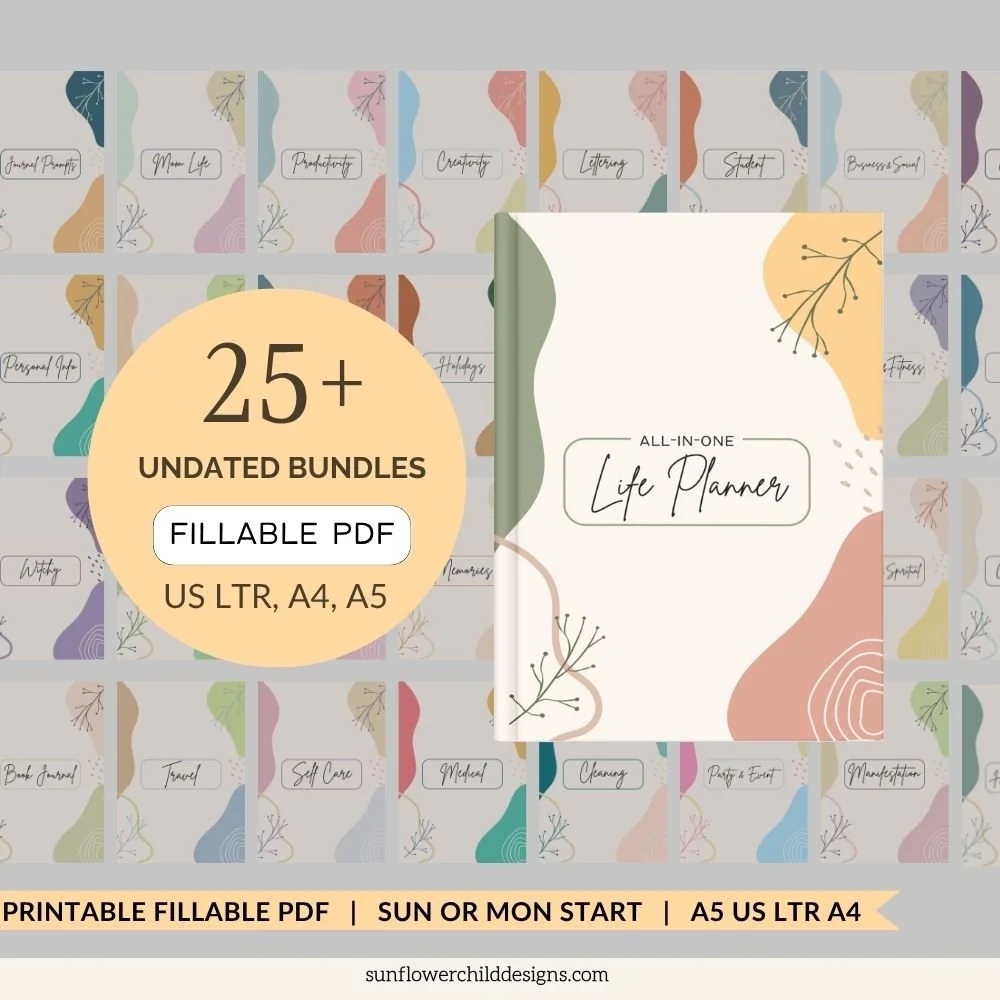
Organize every aspect of your life with this comprehensive All-in-One Undated Printable Planner! Designed for flexibility and ease of use, this planner offers tools to support your personal growth, productivity, and creativity—all in one place. With checklists, guides, and reflection pages, it’s perfect for enhancing your daily routine, managing goals, capturing cherished memories, and creating a balanced, fulfilling life.
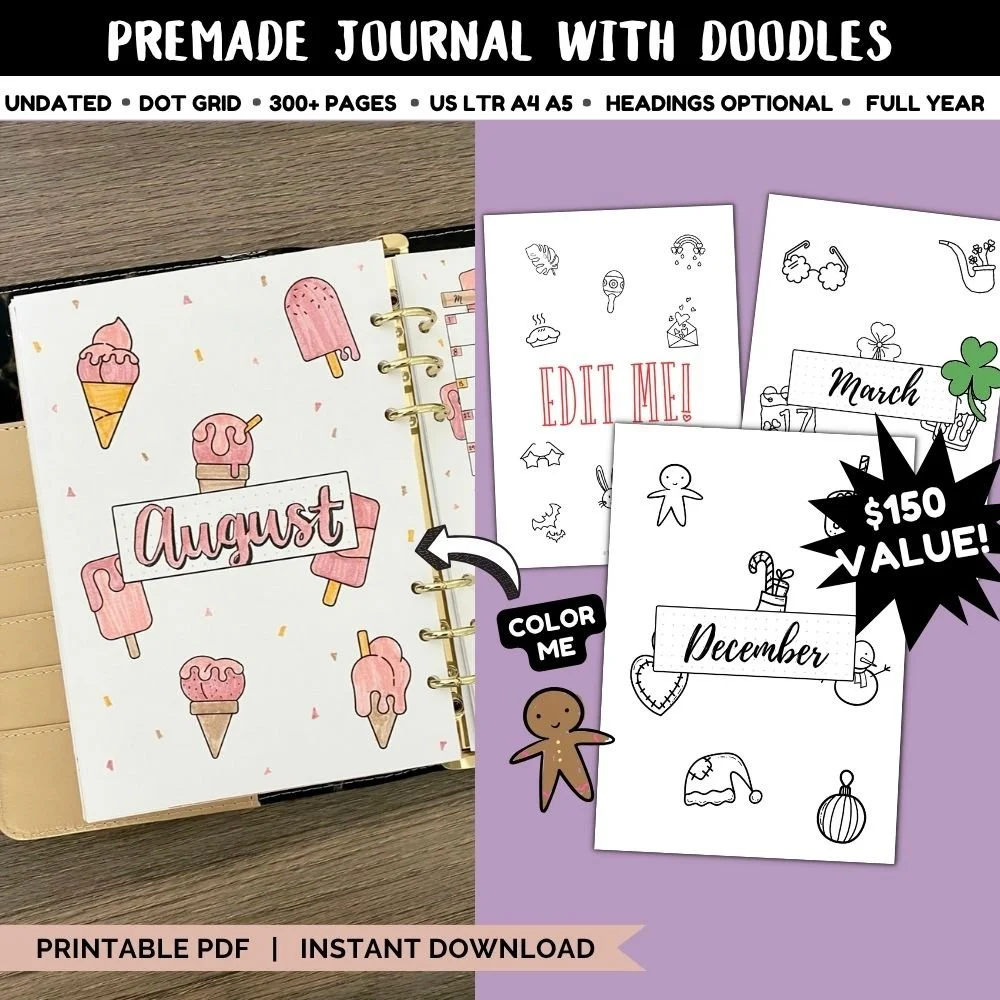
This Premade Dotted Doodle Journal Bundle gives you an entire year of creative, holiday-inspired bullet journal pages — ready to print and use.
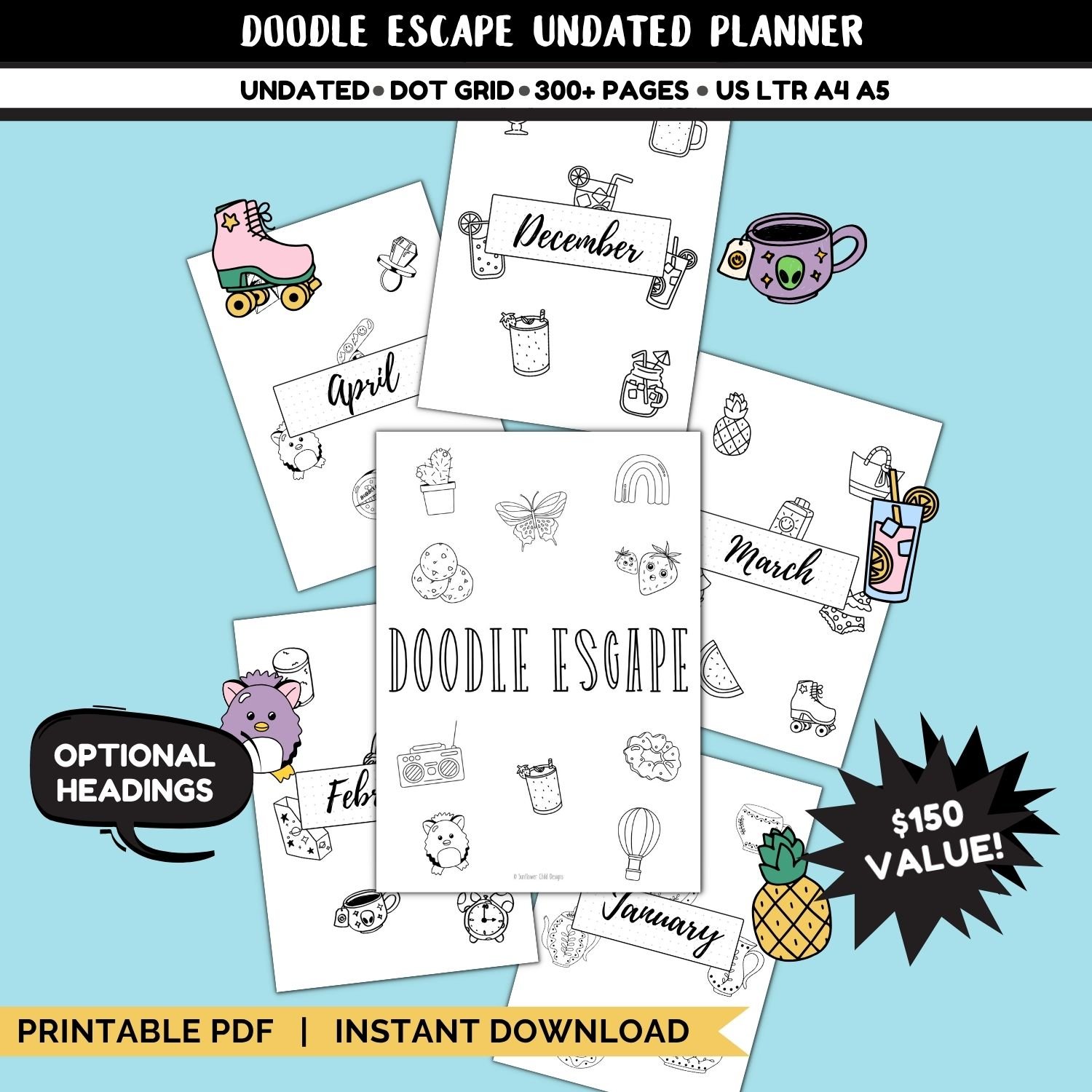
Find creative joy with the Doodle Escape Undated Planner, enabling artistic adventures while keeping you organized. This creativity-inspiring planner, with different themes each month and over 300 pages, offers a unique blend of doodling fun and organization, fulfilling everyone's planning requirements.
Bullet Journal Blog
Archive Free Printables

Your small gesture makes a HUGE difference, pin one!